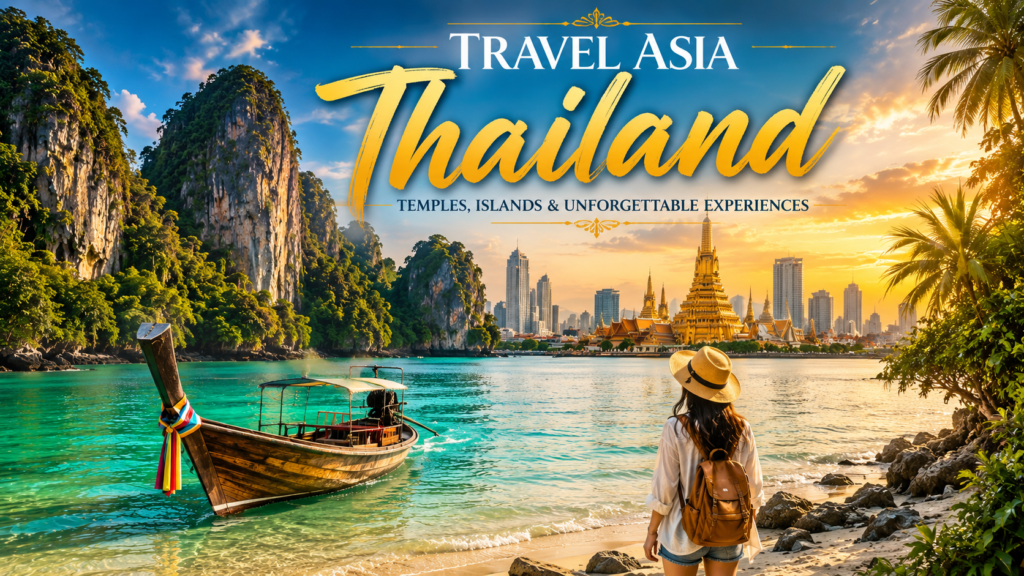

Travel Asia Thailand and you will quickly discover why this country remains one of the most appealing destinations in Southeast Asia. Thailand brings together ancient temples, energetic cities, tropical islands, dramatic limestone landscapes, exceptional food, welcoming communities, and an impressive range of travel experiences within one relatively accessible country.
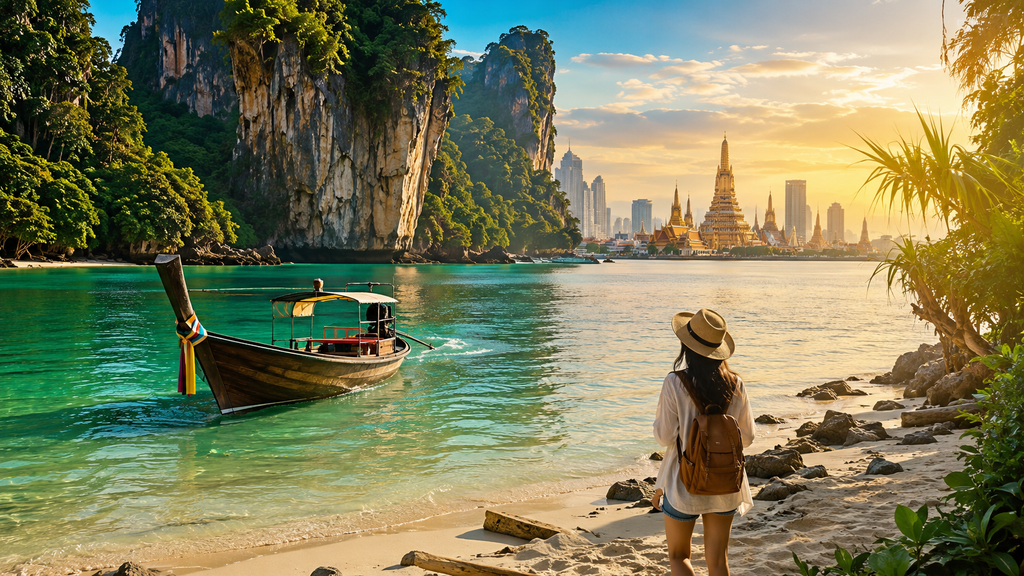
For some travelers, Thailand means wandering through Bangkok markets and temples. For others, it means snorkeling in turquoise water around southern islands, exploring the mountains and cultural heritage of Chiang Mai, or spending slow mornings beside a beach in Krabi. The beauty of traveling through Thailand is that you do not have to choose just one style.
Thailand can work for a short city break, a two week Southeast Asia itinerary, a family vacation, a honeymoon, a backpacking adventure, or a more comfortable luxury trip. The key is understanding the country’s geography and choosing destinations that match the kind of journey you actually want.
This Thailand travel guide covers the essential information you need before planning your trip, including where to go, what to do, when to visit, transportation, accommodation, food, costs, practical considerations, and whether Thailand deserves a place on your Asia travel list.
Why Travel Asia Thailand?
Thailand has an unusual ability to satisfy very different travelers. You can spend one day visiting centuries old temples and the next exploring a modern shopping district, taking a long tail boat through tropical scenery, or eating street food at a lively night market.
The country’s diversity is one of its greatest strengths.
Bangkok provides the urban experience, with temples, markets, restaurants, museums, shopping, nightlife, and the Chao Phraya River. The Tourism Authority of Thailand highlights attractions including Wat Phra Kaew, Wat Pho, Wat Arun, Golden Mountain, and Chatuchak Weekend Market.
Northern Thailand feels different. Chiang Mai combines Lanna cultural traditions with mountain scenery, craft markets, temples, local food, and access to nature. Doi Suthep, Doi Inthanon, Nimmanhaemin Road, and Thapae Walking Street are among its well known attractions.
Then there is southern Thailand, where beaches and islands become the main attraction. Phuket, Krabi, Koh Samui, Koh Tao, Koh Lipe, and numerous smaller islands offer different versions of a tropical escape.
That combination makes Thailand particularly useful for travelers who want more than a single type of holiday.
Best Places to Visit in Thailand
Thailand is geographically diverse, so trying to see everything on one trip usually creates more rushing than enjoyment. A better strategy is to choose two or three regions and give each enough time.
Bangkok
Bangkok is often the easiest starting point for a first trip to Thailand and deserves more than a quick airport stop.
The city can feel overwhelming at first. Traffic is busy, streets are crowded, and the heat can be intense. But beneath that energy is a fascinating mixture of old and new.
Begin with Bangkok’s historic and riverside areas. Wat Phra Kaew, Wat Pho, and Wat Arun provide some of the city’s most memorable cultural experiences. You can also explore markets, museums, Chinatown, shopping districts, and the Chao Phraya River.
Food is another reason to spend time here. Bangkok is an excellent place to try Thai dishes ranging from familiar favorites such as pad Thai and green curry to regional specialties and street food dishes you may not recognize immediately.
Rather than packing every attraction into one day, allow yourself time to wander. Some of Bangkok’s most enjoyable moments happen between major sightseeing stops.
Chiang Mai
Chiang Mai is a strong choice for travelers who want culture, mountains, cafés, crafts, and a slower atmosphere.
The city is surrounded by northern landscapes and provides access to temples and nature. Doi Suthep is one of its best known landmarks, while Doi Inthanon offers mountain scenery and the opportunity to explore Thailand’s highest peak area.
Chiang Mai is also known for its markets and handmade products. Thapae Walking Street and Nimmanhaemin Road offer opportunities to shop, eat, and experience a more contemporary side of the city.
For travelers who dislike constantly changing hotels, Chiang Mai can be an especially comfortable base for several days.
Phuket
Phuket is Thailand’s largest island and sits in the Andaman Sea. It combines beaches, restaurants, resorts, nightlife, viewpoints, water activities, and access to surrounding islands.
The important thing to understand is that Phuket is not one single beach destination. Different parts of the island have noticeably different atmospheres.
Patong is lively and developed, while areas such as Mai Khao can provide a quieter experience. Kata and Karon offer a middle ground for travelers who want beaches with plenty of services nearby.
Phuket also makes a useful base for boat trips and excursions around the Andaman coast.
Krabi and Railay
Krabi is one of the strongest choices for travelers who want dramatic scenery alongside beach time.
The province is known for limestone cliffs, islands, coral reefs, caves, hot springs, and national parks. Ao Nang is a major base for boat trips to nearby islands and beaches, while Railay is particularly famous for its spectacular limestone landscape.
Krabi works well for couples, photographers, adventure travelers, and anyone who wants tropical scenery without spending an entire trip at a resort.
If you enjoy outdoor activities, consider adding snorkeling, kayaking, hiking, rock climbing, or island hopping to your itinerary.
Koh Samui and the Gulf Islands
The islands in the Gulf of Thailand offer another side of the country’s coastal experience.
Koh Samui is more developed and offers a wide selection of accommodation, restaurants, beaches, and activities. Nearby Koh Tao is particularly associated with diving and underwater experiences.
Seasonal conditions matter when choosing between Thailand’s different coastal regions. Thailand’s seas do not all experience their best weather at exactly the same time, so checking conditions for your specific destination is important rather than assuming the entire country shares one beach season. The Tourism Authority of Thailand provides seasonal guidance for different coastal areas.
What to Do When You Travel Asia Thailand
Thailand offers enough activities to build completely different vacations around the same country.
Explore Temples and Thai Culture
Temples are among Thailand’s defining cultural attractions, but visiting them is more rewarding when you treat them as active religious and cultural spaces rather than simply photo locations.
Dress respectfully, follow posted rules, and be aware of appropriate behavior.
Bangkok and Chiang Mai are particularly good destinations for travelers interested in temples, architecture, history, and Thai cultural traditions.
Experience Thai Food
Food should be a major part of any Thailand itinerary.
Try familiar dishes, but do not stop there. Explore local markets, regional specialties, noodle dishes, curries, grilled foods, fresh fruit, soups, and desserts.
Street food can be inexpensive and delicious, although travelers should still use normal food safety judgment. Busy stalls with high turnover are generally preferable to food that appears to have been sitting out for long periods.
Spend Time on the Water
Southern Thailand provides countless opportunities for snorkeling, diving, kayaking, swimming, boat trips, and island exploration.
Krabi and Phuket are particularly convenient for exploring the Andaman coast, while destinations such as Koh Tao are well known for diving.
If your itinerary revolves around islands, avoid scheduling every activity too tightly. Weather can affect boat services, and leaving some flexibility can prevent a beautiful vacation from becoming a stressful race against the clock.
Explore Markets
Markets reveal another side of Thailand.
Bangkok’s Chatuchak Weekend Market and various night markets offer shopping and food, while northern markets can provide handmade crafts and regional products.
Markets are also excellent places to slow down and observe everyday life rather than moving from one famous attraction to another.
Best Time to Travel Asia Thailand
There is no single perfect month for every part of Thailand.
Thailand has regional differences in weather, and coastal conditions vary between the Andaman Sea and the Gulf of Thailand. This means your ideal travel period depends partly on where you are going.
For a general Thailand trip, the cooler and drier part of the year is often attractive for sightseeing, particularly if you plan to combine Bangkok and northern destinations with southern beaches.
However, travelers should not automatically dismiss the wetter months. Rain can be seasonal and unpredictable, and some periods can bring lower accommodation demand and fewer crowds.
If beaches are your priority, research the specific island or coast you plan to visit rather than relying on a nationwide weather assumption. Thailand’s official tourism information provides separate seasonal guidance for different coastal destinations.
Before booking non refundable activities, check the forecast and local transportation conditions.
Getting Around Thailand
Thailand is relatively easy to navigate once you understand the distances involved.
Domestic Flights
Flying is usually the most practical choice when moving between distant regions.
For example, traveling between Bangkok and southern destinations by air can save a significant amount of time compared with long distance ground transportation.
Trains
Trains can be a rewarding way to travel between certain destinations, especially when you have enough time and want to experience the journey rather than simply reach the next city.
Night trains can also be useful for travelers who want to combine transportation and accommodation.
Buses and Minivans
Buses connect many cities and tourist destinations. They can be economical, although journey times vary considerably.
Minivans are common on shorter routes but may feel less comfortable if you have large luggage.
Ferries and Speedboats
Island travel frequently requires ferries or speedboats.
Always check the departure point carefully because different services may use different piers. Weather can also affect marine transportation, particularly during rough conditions.
Where to Stay in Thailand
Accommodation in Thailand ranges from hostels and simple guesthouses to boutique hotels, beach resorts, and high end properties.
Your neighborhood can matter as much as the hotel itself.
In Bangkok, staying near convenient public transportation can make sightseeing significantly easier. In Chiang Mai, staying within or close to the historic center can be useful for travelers focused on temples and markets.
In beach destinations, think carefully about whether you want nightlife, restaurants, quiet surroundings, or easy access to boat tours.
Do not choose a hotel based solely on a beautiful photograph. Check its location, transportation access, recent guest feedback, cancellation policy, and what is actually included in the room rate.
Thailand Travel Costs
Thailand can accommodate several different travel budgets.
Budget travelers can reduce costs by choosing hostels, local restaurants, public transportation, and fewer paid excursions. Mid range travelers can combine comfortable hotels with local dining and selected tours. Luxury travelers have extensive options in Bangkok, Phuket, Koh Samui, and other major destinations.
The largest variation often comes from accommodation, transportation between regions, island excursions, and the season in which you travel.
Instead of setting one fixed daily budget for every traveler, divide your planning into categories:
- Accommodation
- Food and drinks
- Local transportation
- Intercity transportation
- Tours and activities
- Entrance fees
- Travel insurance
- Shopping and personal expenses
This approach gives you a more realistic picture of what your trip will cost.
Practical Tips for Traveling in Thailand
Thailand is generally straightforward for international travelers, but a little preparation makes the experience smoother.
Carry some local currency for small purchases, markets, transport, and businesses that may not accept cards.
Dress appropriately when visiting temples and religious sites.
Keep your accommodation details and important travel documents accessible.
Use reputable transportation providers and confirm prices before beginning journeys when a fare is not clearly displayed.
Stay hydrated, especially when sightseeing outdoors in hot weather.
Use sunscreen and protect yourself from excessive sun exposure.
Do not underestimate travel time. A destination that looks close on a map can require multiple transportation connections.
Most importantly, do not try to turn Thailand into a checklist. A slower itinerary often produces a better trip.
Pros and Cons of Traveling in Thailand
The Advantages
Thailand offers remarkable variety. You can combine cities, culture, mountains, beaches, food, nightlife, and outdoor activities without leaving the country.
It is also suitable for different travel styles. Backpackers can travel simply, families can choose comfortable resorts and organized activities, while couples and luxury travelers have sophisticated options.
The country’s established tourism infrastructure makes it relatively easy to plan popular routes.
The Challenges
Popular destinations can become crowded, particularly during peak periods.
Bangkok’s traffic can be frustrating, and long transfers between regions can consume valuable vacation time.
Weather is another consideration. Conditions vary significantly by region and season, especially if your trip depends on beaches and boat transportation.
Some heavily visited areas can also feel commercialized. Travelers seeking solitude may need to move beyond the most famous locations.
What to Expect From a Thailand Trip
A Thailand trip is rarely just one experience.
You may begin in a fast moving city surrounded by skyscrapers and temples, then find yourself eating noodles at a neighborhood market. A few days later, you could be walking through a northern mountain community or sitting beside an Andaman beach.
That contrast is exactly what makes the country memorable.
You should expect heat, occasional rain, busy tourist areas, unfamiliar foods, different cultural customs, and sometimes slower transportation than planned.
You should also expect extraordinary scenery, excellent food, cultural richness, and plenty of opportunities to design a trip around your own interests.
Is Thailand Worth Visiting?
Yes, for most travelers, Thailand is absolutely worth visiting.
Its biggest advantage is versatility. You do not have to be a backpacker, beach lover, nightlife enthusiast, or luxury traveler to enjoy it. The country has enough variety to support many different travel styles.
Thailand is especially worthwhile if you are planning a broader Southeast Asia trip because its major destinations can complement one another. Bangkok provides an energetic introduction, Chiang Mai adds cultural and mountain experiences, and southern Thailand delivers the tropical scenery many visitors associate with the country.
The main requirement is planning intelligently. Do not attempt to cover Bangkok, Chiang Mai, Phuket, Krabi, Koh Samui, and several other islands in a short vacation. Choose destinations that work geographically and give yourself time to enjoy them.
Frequently Asked Questions
Is Thailand good for a first trip to Asia?
Yes. Thailand has a well established tourism infrastructure and offers an unusually broad introduction to Southeast Asia, from cities and temples to beaches, food, markets, and outdoor adventures.
How many days do you need in Thailand?
Around ten days to two weeks can provide a satisfying introduction, although longer trips allow you to explore multiple regions without rushing. A shorter trip is better focused on one city and one nearby region.
What is the best place to visit in Thailand for first time travelers?
Bangkok is a practical starting point because of its attractions and transportation connections. From there, you can add Chiang Mai, Phuket, Krabi, or another destination depending on your interests.
Is Thailand expensive to visit?
Thailand can be relatively affordable compared with many long haul destinations, but costs vary widely. Accommodation, transportation, activities, and travel season have a major effect on your total budget.
Which is better, Phuket or Krabi?
It depends on your priorities. Phuket generally offers more extensive development, nightlife, accommodation, and services, while Krabi is particularly appealing for dramatic limestone scenery, beaches, and outdoor experiences.
What should I eat in Thailand?
Try pad Thai, tom yum, green curry, massaman curry, mango sticky rice, Thai style grilled foods, noodle dishes, fresh fruit, and regional specialties. Exploring local markets is one of the best ways to discover more than the internationally famous dishes.
Is Thailand suitable for families?
Yes. Thailand has family friendly hotels, beaches, cultural attractions, restaurants, and activities. Families should consider travel times and choose accommodation with convenient access to the places they want to visit.
Do I need a visa to travel to Thailand?
Entry requirements depend on your nationality, passport, travel purpose, and current Thai immigration rules. Tourist visa arrangements can also change. For example, Thai authorities publish specific rules for tourist visas and visa exemption schemes, so travelers should verify the current requirements before booking.
Travelers applying from Pakistan should also check the current information published by the Royal Thai Embassy in Islamabad before traveling.
Final Thoughts on Travel Asia Thailand
Travel Asia Thailand if you want a destination that gives you choices rather than forcing you into one style of vacation. Few countries make it so easy to combine vibrant city life, cultural attractions, mountains, tropical islands, street food, adventure, and relaxation in one journey. The most rewarding trips are usually the ones that resist the temptation to see everything.
For a first visit, a balanced itinerary could combine Bangkok with either Chiang Mai or a southern destination. If beaches are your priority, focus your time on Phuket, Krabi, or the Gulf islands rather than trying to cross the country repeatedly. If culture and food matter more, Bangkok and Chiang Mai can form an excellent foundation.
Thailand is worth visiting not because every destination is perfect, but because the country gives you room to create the kind of trip you actually want. Plan around the season, allow realistic travel time, respect local culture, and leave some space for spontaneous discoveries. That is when traveling through Thailand becomes more than simply checking another Asian destination off your list.