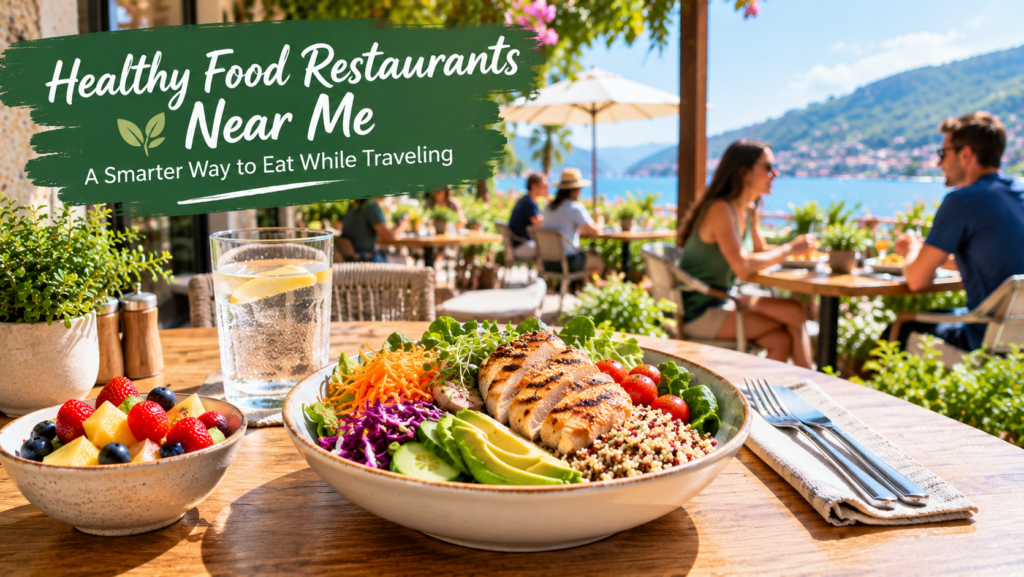

Introduction

Finding healthy food restaurants near me can be surprisingly difficult when you are traveling. A restaurant may use words such as fresh, natural, wholesome, or organic in its marketing, yet the menu may still be heavy in refined carbohydrates, added sauces, fried foods, or oversized portions. For travelers trying to eat well, the real challenge is knowing what to look for before choosing a place.
Healthy dining does not necessarily mean eating plain salads or giving up local cuisine. Many destinations offer restaurants serving fresh vegetables, grilled proteins, whole grains, nourishing soups, fresh seafood, fruit, and traditional dishes prepared with simple ingredients. The key is understanding the menu and choosing a restaurant that fits your personal needs.
This guide explains how to find healthy restaurants nearby, what to look for on a menu, how to compare different types of restaurants, and how to make better food choices while traveling. It also covers options for families, vegetarians, active travelers, people seeking lighter meals, and visitors with specific dietary preferences.
What Does a Healthy Restaurant Actually Mean?
A healthy restaurant generally offers meals built around nutritious ingredients and gives customers reasonable control over preparation, portions, and substitutions. However, there is no single definition of a healthy restaurant because dietary needs vary from one traveler to another.
One person may prioritize vegetables and lean protein, while another may need vegetarian, vegan, gluten free, low sodium, or high protein meals. Someone traveling all day may simply want a balanced meal that provides enough energy without feeling excessively heavy.
The most useful approach is to look beyond a restaurant’s marketing language. Examine the menu and consider how meals are prepared, what ingredients are used, and whether the restaurant provides flexible choices.
Signs of a More Health Conscious Restaurant
Look for menus that include vegetables, fruits, legumes, whole grains, lean proteins, seafood, nuts, seeds, and minimally processed ingredients. Restaurants that offer grilled, roasted, steamed, baked, or lightly sautéed dishes can also make it easier to build a balanced meal.
Menu flexibility is another positive sign. Being able to request dressing separately, replace fries with vegetables, choose brown rice instead of refined grains, or select grilled protein can make a significant difference.
A restaurant does not have to be exclusively focused on health to offer nutritious meals. A local Mediterranean, Japanese, Mexican, Middle Eastern, Indian, or seafood restaurant may provide excellent choices even if healthy eating is not its main theme.
How to Find Healthy Food Restaurants Near Me
The easiest way to find healthy restaurants nearby is to combine map searches with careful menu research. Searching for phrases such as healthy restaurants near me, healthy food near me, clean eating restaurants, vegetarian restaurants, fresh food restaurants, high protein restaurants, or healthy lunch near me can reveal different types of dining options.
Do not choose a restaurant based only on its name or star rating. Open the menu and look at the actual food.
Check the Menu Before You Go
A menu can tell you more about a restaurant than a short description on a search platform. Look for several balanced options rather than a single healthy dish surrounded by heavily fried or highly processed choices.
Pay attention to preparation methods. Grilled chicken with vegetables is generally a different choice from crispy fried chicken with a creamy sauce, even though both may appear under similar menu categories.
It is also useful to check whether the restaurant clearly identifies vegetarian dishes, allergens, ingredients, or dietary options. Clear menu information can make ordering easier, especially when you are unfamiliar with the local cuisine.
Search for Specific Dietary Needs
A broad search for healthy food may not be enough if you have a particular dietary preference. Try more specific searches based on what you actually need.
Useful searches include:
- Healthy vegetarian restaurants near me
- Healthy vegan food near me
- High protein restaurants near me
- Healthy breakfast near me
- Healthy lunch near me
- Healthy dinner near me
- Gluten free restaurants near me
- Healthy food for families near me
- Fresh seafood restaurants near me
- Healthy Mediterranean food near me
More specific searches can reduce the amount of time spent browsing unsuitable menus.
What to Look for on a Healthy Restaurant Menu
A balanced meal does not need to be complicated. In many cases, you can make a better choice by identifying a few basic components.
Start With Vegetables
Vegetables are often the easiest way to improve the nutritional balance of a restaurant meal. Look for salads, roasted vegetables, vegetable soups, steamed greens, grilled vegetables, or vegetable based side dishes.
Be aware that a vegetable dish can become much heavier when covered in creamy sauces, excessive cheese, or fried toppings. Ask about preparation when necessary.
Choose a Suitable Protein
Protein can help make a meal more satisfying, especially during active travel days. Depending on your diet, useful choices may include grilled fish, seafood, chicken, eggs, beans, lentils, tofu, or other plant based proteins.
The cooking method matters. Grilled, baked, roasted, or steamed protein is often easier to incorporate into a lighter meal than heavily breaded or deep fried alternatives.
Consider the Carbohydrate Source
Rice, potatoes, bread, pasta, noodles, and grains can all form part of a balanced meal. The goal is not necessarily to remove carbohydrates but to consider the portion and the overall meal.
Whole grains, legumes, potatoes, and minimally processed grain options can be useful choices when available. Travelers who need a more substantial meal may also prefer a balanced serving of carbohydrates after a long day of walking or outdoor activities.
Healthy Food Choices Across Different Cuisines
One advantage of traveling is that nutritious food can often be found in traditional local cuisines. You do not always need to search for a restaurant specifically labeled healthy.
Mediterranean Food
Mediterranean style dining can provide a wide range of vegetables, legumes, seafood, olive oil, grains, herbs, and grilled proteins. Options such as grilled fish, vegetable dishes, bean based meals, salads, and lentil soups can work well for travelers seeking balanced meals.
Portion sizes and preparation still matter, particularly with fried appetizers, creamy sauces, and large servings of bread.
Japanese Food
Japanese restaurants can offer seafood, vegetables, rice, tofu, soups, and other relatively simple dishes. Sashimi, grilled fish, tofu, vegetable dishes, and certain soups may provide lighter choices.
Travelers should also consider sodium levels in sauces, broths, and some prepared dishes.
Indian Food
Indian cuisine offers many vegetable, lentil, bean, and yogurt based dishes. Dal, vegetable curries, grilled dishes, and tandoori preparations can provide nutritious options.
However, preparation varies significantly. Some dishes may contain substantial amounts of oil, cream, butter, or fried ingredients, so travelers can ask about preparation when choosing lighter meals.
Middle Eastern Food
Middle Eastern restaurants often provide hummus, grilled meats, salads, beans, lentils, vegetables, and grain based dishes. A meal built around grilled protein, vegetables, hummus, and a sensible portion of bread or grains can be satisfying without relying heavily on fried foods.
Mexican Food
Mexican cuisine can also provide nutritious choices. Beans, grilled vegetables, fresh salsa, avocado, corn, lean proteins, and rice can form the basis of a balanced meal.
Travelers should pay attention to large portions of cheese, sour cream, fried tortillas, and heavy sauces if they are looking for a lighter meal.
Healthy Breakfast Options for Travelers
Breakfast can shape how you feel during a full day of sightseeing. Instead of choosing a very large breakfast simply because it is convenient, consider what you have planned for the day.
Eggs with vegetables, oatmeal with fruit, plain or lightly sweetened yogurt with fruit and nuts, whole grain toast, fresh fruit, or a balanced breakfast bowl can provide useful energy.
If you are planning a long walking tour, hiking trip, museum day, or outdoor activity, a more substantial breakfast may be appropriate. The ideal choice depends on your schedule, appetite, and dietary requirements.
Healthy Lunch and Dinner While Traveling
Lunch is often the easiest meal to keep relatively light when you are spending the day exploring. Look for grilled proteins, vegetable based dishes, soups, salads with protein, grain bowls, or traditional meals built around vegetables and legumes.
Dinner can be more flexible. After a physically active day, you may want a more substantial meal. Rather than focusing only on calorie reduction, think about balance, portion size, ingredients, and how the meal fits into the rest of your day.
A healthy travel diet should be practical. You should be able to enjoy local food without feeling that every meal needs to follow a strict formula.
Healthy Restaurants for Families
Families have different challenges because adults and children may want completely different meals. A restaurant becomes more practical when it offers enough variety for everyone without making healthy choices difficult.
Look for restaurants with vegetable sides, simple grilled proteins, soups, fruit, rice, potatoes, and customizable meals. Children may be more willing to try healthier foods when they can choose individual components rather than receiving a complicated mixed dish.
Families should also consider seating, noise level, restroom access, and how long food preparation takes. A nutritious menu is useful, but convenience can be equally important during a busy travel day.
Healthy Dining for Solo Travelers
Solo travelers often have more flexibility because they can choose exactly what they want. Smaller restaurants, cafés, food markets, and casual dining establishments may provide convenient options.
A solo traveler can also benefit from ordering smaller portions or combining a main dish with vegetable sides rather than ordering a large multi course meal.
When exploring a new destination, local markets can also be worth considering. Fresh fruit, prepared salads, soups, grilled foods, and other local specialties may offer alternatives to conventional restaurant meals.
Healthy Food for Active Travelers
Travelers who hike, cycle, swim, walk extensively, or participate in adventure activities may need more energy than someone spending most of the day relaxing.
In this situation, healthy eating should not simply mean eating less. Meals should provide enough carbohydrates, protein, fluids, and other nutrients to support physical activity.
A balanced meal before an active day might include grains or potatoes, vegetables, and protein. After physical activity, a meal containing protein and carbohydrates can be useful as part of normal recovery.
Hydration is also important. Depending on weather and activity level, travelers may need more fluids than they normally consume at home.
How to Compare Healthy Restaurants
When several nearby restaurants look appealing, compare them using practical factors rather than relying entirely on ratings.
| Factor | What to Consider |
|---|---|
| Menu variety | Are there several balanced meal options? |
| Preparation | Are grilled, baked, steamed, or roasted choices available? |
| Dietary flexibility | Can ingredients or sides be changed? |
| Location | Is the restaurant convenient for your itinerary? |
| Portion size | Can you choose a suitable amount of food? |
| Atmosphere | Does it suit solo travelers, couples, or families? |
| Menu transparency | Are ingredients and dietary information clear? |
| Local character | Does the restaurant provide an opportunity to enjoy local cuisine? |
This approach helps you select a restaurant based on your actual needs rather than a generic idea of what healthy food should look like.
How Location Affects Your Restaurant Choice
Location matters more than many travelers expect. A restaurant may offer excellent food but be inconvenient if reaching it requires a long detour from your planned activities.
When searching for healthy restaurants near you, consider what you will be doing before and after the meal. A restaurant near a major attraction may be useful during a sightseeing day, while a place close to your accommodation may be more convenient after a late arrival.
Transportation also matters. If you are relying on public transportation, walking, taxis, or rideshare services, check the restaurant’s location relative to your route.
For travelers with mobility considerations, investigate entrances, seating arrangements, restroom accessibility, and other practical details before visiting when this information is available.
How to Eat Healthy Without Avoiding Local Food
One of the biggest mistakes travelers make is assuming healthy eating means avoiding traditional cuisine. In reality, local food is often one of the most enjoyable parts of travel.
Instead of avoiding regional dishes, learn how to build a balanced meal from them. Try vegetable based specialties, grilled local foods, soups, legumes, fresh seafood, fruit, and traditional grain dishes.
You can also control portions. Sharing a rich local specialty with another traveler can allow you to experience the dish without making it the entire meal.
The goal is not perfection. A sustainable travel approach allows room for both nutritious meals and foods chosen simply because they are culturally interesting or enjoyable.
Common Mistakes When Searching for Healthy Food
One common mistake is trusting labels without examining the menu. Words such as fresh, natural, fit, or wholesome do not automatically tell you how a meal is prepared.
Another mistake is assuming salads are always the healthiest choice. Some restaurant salads contain large amounts of cheese, fried toppings, creamy dressing, or processed ingredients. A grilled meal with vegetables may sometimes be a more balanced choice.
Travelers can also overlook portion sizes. Even nutritious foods can become difficult to manage when portions are much larger than expected.
Finally, do not forget to consider your own needs. A meal that works well for an athlete may not suit someone looking for a lighter lunch, while a vegetarian traveler will have different priorities from someone searching for high protein meals.
When Is a Healthy Restaurant Worth Choosing?
A healthy restaurant is particularly useful when you are traveling for several days and want to maintain a comfortable eating routine. It can also be valuable during active trips, family vacations, business travel, wellness focused getaways, and long sightseeing days.
However, there is no need to make every meal strictly health focused. Travel is also about experiencing local traditions, flavors, and food culture.
The better strategy is balance. Choose nutritious meals most of the time, stay hydrated, enjoy local specialties thoughtfully, and pay attention to how different foods make you feel during the trip.
Who Benefits Most From Healthy Restaurant Searches?
Healthy restaurant searches are useful for almost any traveler, but they can be especially helpful for people who have specific dietary preferences or who are traveling for extended periods.
Families may want nutritious choices for children. Active travelers may need balanced meals that support physical activity. Vegetarians and vegans may need to confirm ingredients before ordering. Travelers focused on wellness may prioritize fresh ingredients and lighter preparations.
People with medically necessary dietary restrictions should take additional care. Online menu descriptions may not provide enough information about cross contamination or preparation methods, so direct communication with restaurant staff may be necessary.
Practical Tips for Finding Better Food on the Road
Search before leaving your accommodation when possible. This gives you time to examine menus rather than making a rushed decision when you are hungry.
Save several potential restaurants instead of relying on a single option. A restaurant may be closed, fully booked, inconveniently located, or unsuitable for your dietary needs.
Look at recent menu information where available because menus can change.
Ask questions when something is unclear. Simple requests such as asking for dressing on the side, choosing vegetables instead of fries, or confirming whether a dish contains a particular ingredient can make dining easier.
Most importantly, remember that healthy travel eating is about consistency rather than perfection. One indulgent meal does not undo an otherwise balanced trip.
Frequently Asked Questions
How do I find healthy food restaurants near me?
Start with a local map search using terms such as healthy restaurants, fresh food restaurants, vegetarian restaurants, or healthy lunch near me. Then review the restaurant menu before choosing. Look for vegetables, suitable protein sources, whole grains, and cooking methods such as grilling, roasting, baking, or steaming.
What should I order at a healthy restaurant?
A practical meal often includes vegetables, a suitable protein source, and a reasonable portion of carbohydrates. Grilled fish, chicken, beans, lentils, tofu, vegetables, whole grains, and fresh fruit can all be useful options depending on your dietary needs.
Are salads always the healthiest restaurant option?
No. Restaurant salads can contain creamy dressings, fried toppings, large amounts of cheese, or processed ingredients. Check the ingredients and consider the entire meal rather than assuming that anything called a salad is automatically healthier.
How can I eat healthy while traveling without avoiding local food?
Choose traditional dishes that include vegetables, legumes, seafood, lean proteins, or minimally processed ingredients when available. You can also control portions and balance richer local specialties with lighter meals during the same day.
What are good healthy restaurant options for families?
Look for restaurants with flexible menus that offer vegetables, fruit, simple proteins, rice, potatoes, soups, and customizable meals. A broad menu makes it easier to satisfy different preferences within the family.
How can I find high protein meals near me?
Search for high protein restaurants, grilled food restaurants, healthy meal restaurants, or specific foods such as grilled fish, chicken, eggs, tofu, beans, or lentils. Always review preparation methods and portion sizes as well.
Should I check restaurant menus before visiting?
Yes. Checking the menu beforehand can save time and help you determine whether the restaurant actually offers food that matches your preferences. This is particularly useful for travelers with dietary restrictions.
Can healthy eating and travel food experiences coexist?
Absolutely. Healthy eating does not require avoiding local cuisine. Many traditional dishes are built around vegetables, grains, legumes, seafood, herbs, and other nutritious ingredients. The key is choosing thoughtfully while leaving room to enjoy the food culture of the destination.
Suggested Internal Link Anchors
Best Travel Hacks
A practical guide to planning a smoother vacation
Why the link is relevant: Readers searching for nearby restaurants are often already planning their daily travel itinerary.
Suggested External Source Opportunities
Official local tourism authority
Conclusion
Finding healthy food restaurants near me is less about choosing a restaurant with the word healthy in its name and more about understanding what is actually available on the menu. Look for fresh ingredients, balanced meals, suitable protein sources, vegetables, sensible portions, and preparation methods that match your preferences. Checking menus before visiting can make the process considerably easier.
This type of restaurant search is especially useful for travelers who want to maintain a balanced routine, families looking for practical meal choices, active travelers who need nourishing food, and people with specific dietary preferences. At the same time, healthy dining does not mean giving up local food or treating every meal as a strict nutritional exercise. Some destinations are best experienced through their traditional cuisine.
The best approach is to combine preparation with flexibility. Search for nearby options, compare menus, consider location and transportation, ask questions when ingredients are unclear, and choose meals that fit your needs on that particular day. Whether you are exploring a new city or simply looking for a better meal close to your accommodation, thoughtful restaurant selection can make healthy eating a natural part of the travel experience.