

The United States is one of those countries where a single trip can feel completely different from another. You can spend a few days surrounded by skyscrapers and museums in New York City, drive through dramatic desert landscapes in Utah, relax beside tropical beaches in Hawaii, or watch wildlife beneath enormous mountains in Alaska.
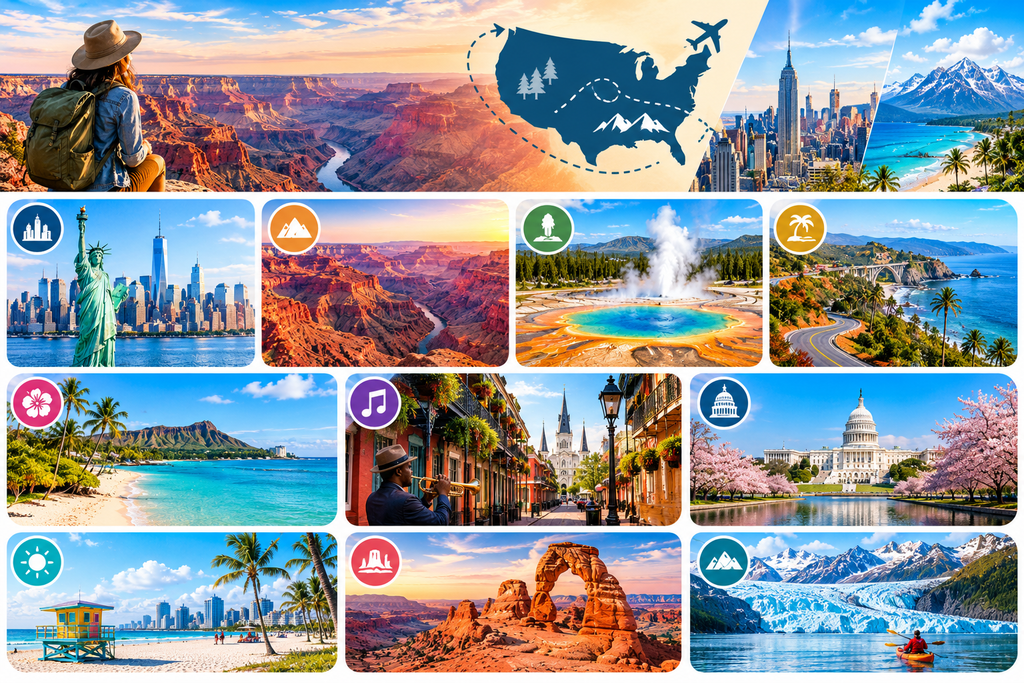
That variety is what makes American travel destinations so interesting for both international visitors and domestic travelers. The country combines major cities, national parks, historic communities, beaches, mountain regions, cultural centers, and scenic road trip routes across a huge geographic area.
The challenge is not finding somewhere to go. It is choosing a destination that matches the kind of experience you actually want.
The National Park Service manages more than 400 national park sites across the United States and its territories, giving travelers an enormous range of natural and cultural places to explore. It also recommends checking individual park conditions, fees, reservations, road conditions, and seasonal access before traveling.
What makes American travel destinations worth exploring
The biggest advantage of traveling across the United States is variety. Different regions offer dramatically different landscapes, climates, food traditions, architecture, and outdoor experiences.
A city break might focus on museums, restaurants, neighborhoods, shopping, entertainment, and historic landmarks. A national park trip can instead revolve around hiking, wildlife, photography, camping, scenic drives, or simply spending time outdoors.
The country is also well suited to different travel styles. Families can choose destinations with attractions and easy sightseeing, couples can combine cities with scenic escapes, solo travelers can explore major urban centers, and adventure travelers have access to mountains, deserts, forests, coastlines, and wilderness areas.
For travelers visiting from outside the United States, this diversity can also make the country feel like several different destinations within one trip.
Best American travel destinations for different types of trips
There is no single destination that suits every traveler. Your ideal choice depends on your available time, budget, interests, preferred climate, and comfort with driving.
For a classic city vacation, New York City offers an enormous concentration of attractions, food, culture, and entertainment.
For dramatic natural scenery, the Grand Canyon and Yellowstone stand out for very different reasons. The Grand Canyon is famous for its immense geological landscape, while Yellowstone combines geothermal features, mountains, forests, lakes, and wildlife.
California works particularly well for travelers who want variety in one state. Hawaii is better suited to travelers prioritizing tropical scenery and island experiences. New Orleans offers a distinctive combination of food, music, architecture, and cultural history.
Washington, DC is particularly useful for travelers interested in American history, museums, monuments, and government institutions, while Florida offers beaches, theme parks, warm weather, and nature.
Utah and Alaska are especially appealing to travelers looking for large scale outdoor landscapes.
New York City
New York City is one of the most recognizable American travel destinations and can easily fill several days without requiring a car.
The city is known for landmarks such as Times Square, Central Park, the Statue of Liberty, the Empire State Building, and its extensive museum scene. Beyond the famous attractions, neighborhoods such as Greenwich Village, SoHo, Chinatown, Harlem, and Brooklyn provide very different experiences.
One advantage of visiting New York is its concentration of attractions. You can spend the morning exploring a museum, walk through a historic neighborhood in the afternoon, and finish the evening with a restaurant or performance.
Public transportation makes it practical to explore many parts of the city without renting a vehicle.
The main drawback is that accommodation and dining can become expensive, particularly in popular areas. Travelers should also avoid trying to see everything in one visit. A focused itinerary is usually more enjoyable than moving constantly between distant attractions.
Grand Canyon
The Grand Canyon is one of the most famous natural landmarks in the United States and an important choice for travelers interested in landscapes, photography, hiking, and scenic drives.
The South Rim is generally the more accessible and developed area, with viewpoints, visitor facilities, trails, and services. The North Rim provides a different experience and operates seasonally, so travelers need to check current conditions before planning a visit.
Visitors do not need to be serious hikers to appreciate the canyon. Scenic viewpoints provide extraordinary perspectives, while more active travelers can explore trails that descend below the rim.
The scale of the landscape is easy to underestimate. Temperatures and conditions can also change considerably with elevation, so preparation matters.
A Grand Canyon trip works especially well as part of a wider Southwest road trip that includes destinations in Arizona, Utah, or Nevada.
Yellowstone National Park
Yellowstone is another major destination for travelers seeking nature and wildlife. Its geothermal features include geysers, hot springs, mudpots, and other unusual landscapes.
Wildlife viewing is also an important part of the experience. Visitors may encounter bison, elk, bears, wolves, and other species, although wildlife sightings are never guaranteed.
Yellowstone changes significantly with the seasons. The National Park Service notes that peak season is the busiest period, while off peak and winter periods can involve fewer visitors but also reduced services and access. Weather can affect roads and facilities, so checking current conditions before traveling is essential.
The park is large, so travelers should resist the temptation to create an itinerary that covers every major attraction in a short period. Choosing a few regions and allowing enough driving time usually creates a more manageable experience.
California
California is one of the most versatile choices among American travel destinations because it combines major cities, beaches, mountains, deserts, forests, and wine country.
Los Angeles appeals to travelers interested in entertainment, beaches, restaurants, and urban attractions. San Francisco offers distinctive architecture, waterfront scenery, neighborhoods, and access to nearby natural areas.
Further north, travelers can explore redwood forests, while inland areas provide mountain and desert landscapes. Yosemite National Park is another major California attraction, known for waterfalls, granite formations, meadows, giant sequoias, and wilderness.
California is particularly suitable for road trips because different landscapes can be connected within a longer itinerary.
However, distances can be greater than they appear on a map. Travelers should calculate driving time carefully rather than assuming that nearby looking destinations can easily be combined in a single day.
Hawaii
Hawaii offers a very different side of American travel. The islands provide tropical beaches, volcanic landscapes, forests, waterfalls, marine environments, and distinctive local culture.
Travelers can choose between relaxing beach vacations and more active trips involving hiking, snorkeling, scenic drives, boating, or exploring volcanic landscapes.
One important consideration is that Hawaii is not a single uniform destination. Oahu, Maui, Kauai, and Hawaii Island each offer different experiences. Your choice should depend on whether you prioritize beaches, hiking, nightlife, scenic landscapes, cultural attractions, or a slower island atmosphere.
Because flights and accommodation can represent a significant portion of the budget, Hawaii generally benefits from careful advance planning.
New Orleans
New Orleans offers one of the most distinctive cultural experiences in the United States. The city is particularly associated with music, food, historic architecture, festivals, and the atmosphere of neighborhoods such as the French Quarter.
Food is a major reason to visit, with local traditions shaped by Creole and Cajun influences alongside many other culinary traditions.
Music is equally important. Travelers can encounter live performances in venues throughout the city, making it possible to experience the destination through sound as much as sightseeing.
New Orleans is especially appealing to travelers who prefer cultural exploration rather than a conventional sightseeing checklist.
Weather and major event periods can influence prices and crowds, so checking the calendar before booking is useful.
Washington, DC
Washington, DC is an excellent destination for travelers interested in American history, politics, museums, monuments, and architecture.
The National Mall provides access to several major landmarks and museums, allowing visitors to explore a significant amount of history within a relatively concentrated area.
The city can also work well for families because many museums and attractions provide educational experiences alongside traditional sightseeing.
Spring is particularly associated with the city’s famous cherry blossoms, although visitors should expect greater demand during popular periods.
Because many major attractions are concentrated around the central areas, travelers can create an itinerary around walking and public transportation rather than relying entirely on a car.
Florida
Florida is one of the most diverse choices for travelers seeking warm weather. Its attractions range from beaches and coastal communities to theme parks, wetlands, wildlife areas, and major cities.
Orlando is strongly associated with theme parks and family vacations, while Miami offers beaches, nightlife, restaurants, art, and a distinctive multicultural atmosphere.
The Florida Keys provide a different experience, with a relaxed island environment and opportunities for water based activities.
Florida is also useful for travelers who want to combine relaxation with outdoor experiences. However, weather conditions can vary significantly throughout the year, and travelers should consider heat, humidity, rainfall, and tropical weather when planning.
Utah’s national parks
Utah is one of the strongest choices for travelers who want a road trip centered around dramatic landscapes.
The state is home to several major national parks featuring sandstone formations, deep canyons, arches, cliffs, and desert scenery.
A Utah road trip can connect multiple parks, but travelers should remember that each park deserves adequate time. Hiking distances, heat, elevation, road conditions, and seasonal closures can all affect how much can realistically be accomplished.
Spring and fall can be attractive periods for outdoor exploration because temperatures may be more comfortable than during the hottest part of summer, although conditions vary by location and elevation.
For travelers interested in landscape photography, hiking, scenic drives, and national park trips, Utah provides an unusually concentrated collection of natural scenery.
Alaska
Alaska offers a scale of wilderness that is difficult to compare with most other American travel destinations.
Travelers come for mountains, glaciers, forests, wildlife, waterways, and expansive landscapes. Denali National Park is one of the best known places to experience this environment.
The National Park Service notes that Denali’s primary visitor season runs roughly from late May through early September, although the park remains accessible for different forms of recreation outside summer.
Alaska requires more planning than a typical city vacation. Distances are substantial, seasonal transportation changes are important, and some services operate only during certain parts of the year.
For travelers who enjoy wilderness and outdoor adventure, however, Alaska can become the centerpiece of an unforgettable itinerary.
Choosing the right American destination
Start by deciding what you want your trip to feel like.
If you want museums, restaurants, entertainment, and urban sightseeing, focus on cities such as New York City or Washington, DC.
If you want beaches and warm weather, consider Florida or Hawaii.
If dramatic scenery is your priority, look toward the Grand Canyon, Yellowstone, Utah, California, or Alaska.
For families, the right destination may depend heavily on children’s ages and interests. Theme parks, museums, wildlife experiences, beaches, and accessible national parks can all work well, but they require different planning approaches.
Your available time should also influence your decision. A long weekend is better suited to one city or a compact region. A longer vacation gives you more flexibility for road trips or destinations involving significant travel between attractions.
Best time to visit the USA
There is no universal best month for visiting the United States because the country covers a huge geographic area with very different climates.
Spring can be excellent for cities, gardens, coastal destinations, and some lower elevation outdoor areas. Summer is popular for family vacations and national parks, although some destinations become crowded.
Fall can bring comfortable temperatures and colorful foliage in many regions. Winter is ideal for some ski destinations and warmer states but can create snow and road challenges elsewhere.
National parks are especially seasonal. The National Park Service recommends checking individual park websites for operating dates, road conditions, reservations, weather, and current alerts before traveling.
Transportation and getting around
Transportation depends heavily on your destination.
In large cities such as New York City and Washington, DC, public transportation can reduce the need for a rental car.
For national parks and many scenic regions, a car is often much more practical. Road trips are particularly useful in California, Utah, Arizona, and parts of the Rocky Mountain region.
Domestic flights can save considerable time when traveling between distant parts of the country. A traveler combining New York, California, and Hawaii, for example, should think of those as separate travel segments rather than one continuous road trip.
Always account for airport transfers, parking, fuel, tolls, and travel time when comparing transportation options.
Costs and entrance fees
Travel costs vary enormously depending on the destination, season, accommodation type, transportation, and activities.
Major cities can involve substantial accommodation and dining costs, while national park trips may shift more of the budget toward transportation, camping, lodging, equipment, and park related fees.
Not every National Park Service site charges an entrance fee. Some do, and certain locations may also require reservations or timed entry. The National Park Service provides information on standard passes, annual passes, and the America the Beautiful pass for eligible federal recreation sites.
For a road trip, remember to budget beyond the hotel and flight. Fuel, parking, food, attraction tickets, rental car costs, insurance, and unexpected expenses can significantly affect the final total.
Practical planning tips
Good planning is particularly important for American travel destinations because distances can be large and conditions can change quickly.
Check the official website for every national park or major attraction before departure. The National Park Service specifically recommends checking fees, reservations, timed entry requirements, maps, operating hours, road conditions, and safety information.
Do not create an itinerary that leaves no room for delays. Traffic, weather, road closures, long distances, and unexpected stops can easily change a travel day.
For outdoor destinations, bring appropriate footwear, water, sun protection, layers, and navigation tools. Wildlife should always be observed from a safe distance.
It is also worth downloading relevant travel apps and maps before leaving areas with reliable internet access. Some national parks have limited or unreliable cellular service. Yosemite, for example, specifically recommends downloading offline content before arrival.
What to expect
The United States can feel very different depending on where you travel.
Major cities tend to be fast paced and highly developed, while national parks can involve long drives, limited cellular service, changing weather, and fewer services.
Distances are another important consideration. A destination that looks close on a map may still require several hours of driving.
Travelers should also expect differences in climate within the same trip. A journey through California or the Southwest can involve significant changes in temperature between coastal areas, mountains, and desert regions.
The most enjoyable trips usually leave enough flexibility to experience the destination rather than spending every day rushing between attractions.
Is visiting American travel destinations worth it?
For travelers who value variety, the United States offers an unusually broad selection of experiences. You can combine major cities with national parks, beaches with mountains, historic attractions with modern entertainment, or a road trip with several completely different landscapes.
The main challenge is scale. Trying to experience too many regions during one trip can make the journey expensive and exhausting. Choosing one region and exploring it properly is often more practical than attempting to cover the entire country.
The destination is therefore best approached according to your own interests and available time. Whether your priority is culture, nature, food, beaches, adventure, history, or family activities, there are American travel destinations that can fit your itinerary.
Frequently Asked Questions
What are some of the best American travel destinations?
Popular choices include New York City, the Grand Canyon, Yellowstone National Park, California, Hawaii, New Orleans, Washington, DC, Florida, Utah, and Alaska. The right destination depends on your interests, budget, travel dates, and available time.
What is the best American destination for nature lovers?
There are many options. Yellowstone, the Grand Canyon, Utah’s national parks, California’s national parks, and Alaska are particularly suitable for travelers interested in mountains, wildlife, forests, deserts, glaciers, and dramatic landscapes.
What is a good American destination for families?
Florida can be a strong choice for families interested in theme parks and beaches. Washington, DC can work well for families interested in museums and history, while many national parks offer educational outdoor experiences.
What is the best time to visit American travel destinations?
It depends on the destination. Spring and fall can offer comfortable conditions in many regions, summer is popular for national parks and family vacations, and winter can be ideal for warmer destinations or snow based activities.
Are American national parks expensive to visit?
Some National Park Service sites are free, while others charge entrance fees. Some destinations also require reservations or timed entry. The National Park Service recommends checking individual park requirements before traveling.
Do I need a car when traveling around the USA?
Not always. Major cities often have public transportation, but a car can be very useful for national parks, rural destinations, and road trips. Your transportation choice should depend on the region you are visiting.
How much time should I spend in the USA?
There is no single ideal length. A short trip can focus on one city, while a longer vacation can explore an entire region. Because the country is geographically large, trying to visit too many distant destinations in a short period can create unnecessary travel time.
Should I book national park trips in advance?
Advance planning is recommended for popular parks, particularly when lodging, camping, tours, permits, or timed entry may be required. The National Park Service recommends checking reservation requirements before arriving.
Conclusion
American travel destinations offer an exceptional range of experiences, from the energy of New York City to the immense landscapes of the Grand Canyon, the geothermal wonders of Yellowstone, the tropical scenery of Hawaii, and the wilderness of Alaska. The variety means travelers can build a trip around almost any interest.
The key is to choose according to the experience you actually want rather than trying to see as much of the country as possible. Consider your budget, travel season, transportation, available time, and preferred activities before creating your itinerary. For national parks especially, check official information about fees, reservations, road conditions, and seasonal access before leaving.
Whether you are planning your first trip to the United States or looking for a new region to explore, there is plenty of room to create a memorable journey. Choose a destination that matches your travel style, give yourself enough time to experience it properly, and leave some flexibility for the unexpected discoveries that often become the best part of a trip.