

The United States is difficult to summarize as a single travel destination. Its enormous size means that a trip to New York can feel completely different from a journey through Yellowstone, a beach vacation in Hawaii, or a road trip through Utah’s desert landscapes.
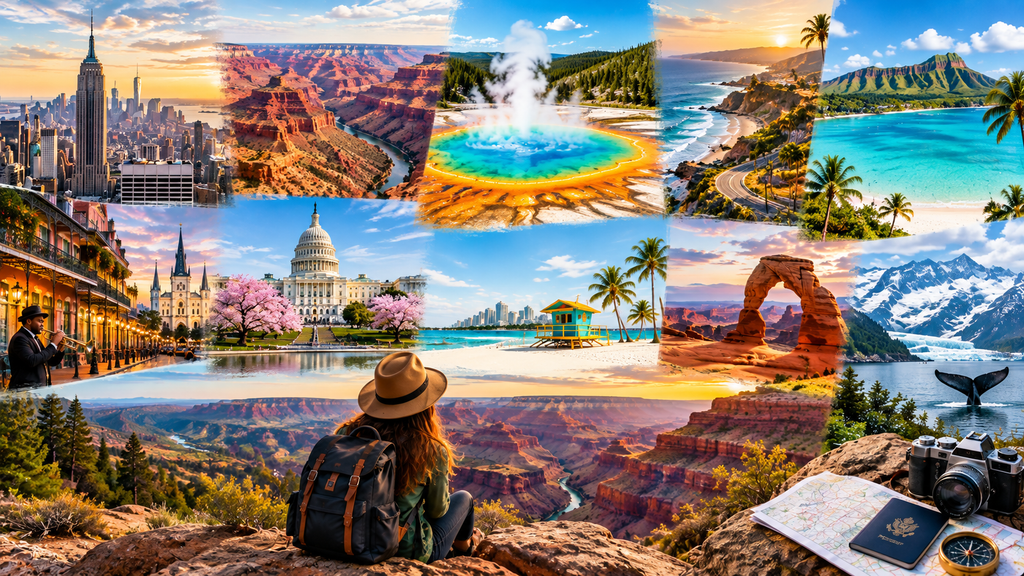
That variety is exactly what makes US travel destinations so appealing. Travelers can combine major cities, national parks, beaches, historic communities, mountain scenery, food focused trips and long road journeys within the same country.
The key is not trying to see everything at once. The USA rewards travelers who choose a region or travel style and give themselves enough time to experience it properly.
This guide explores some of the most distinctive places to visit in the United States, along with practical information to help you decide where your next trip should take you.
What Makes US Travel Destinations So Diverse?
The biggest advantage of traveling around the United States is variety.
The country includes Atlantic and Pacific coastlines, tropical islands, deserts, forests, alpine mountains, enormous lakes and distinctive urban centers. The National Park Service alone manages more than 400 sites, although only some are officially designated national parks.
That means travelers can build very different vacations without leaving the country.
You might spend a few days exploring museums and neighborhoods in New York City, then take another trip focused almost entirely on hiking and wildlife. Someone else may prefer Florida beaches, while another traveler might plan a food and music weekend in New Orleans.
There is no single definition of the perfect American vacation.
New York City for Culture and City Experiences
New York City is one of the most recognizable US travel destinations and works particularly well for travelers who want culture, entertainment, food and urban sightseeing.
Manhattan provides famous attractions such as Central Park, the Empire State Building, Broadway and major museums, while neighborhoods across Brooklyn, Queens and other boroughs offer a broader look at the city’s character.
What to expect
New York is energetic, crowded and expensive compared with many smaller American destinations. Walking and public transportation can make it possible to explore without renting a car, which is a major advantage for a city break.
First time visitors often focus on iconic attractions, but leaving time for neighborhoods, restaurants, parks and local streets can make the trip feel less rushed.
Best time to visit
Spring and autumn are particularly attractive for comfortable sightseeing. Summer can be hot and busy, while winter brings colder conditions but also a different atmosphere around the holiday season.
Grand Canyon for Dramatic Landscapes
For travelers searching for spectacular natural scenery, the Grand Canyon remains one of the defining US travel destinations.
The immense scale of the canyon is difficult to appreciate from photographs alone. Viewpoints along the South Rim provide some of the most accessible opportunities to see the landscape, while hiking, scenic drives and ranger programs can add depth to a visit.
What to expect
The Grand Canyon is not simply a viewpoint destination. Temperatures, elevation and hiking conditions can change considerably, and descending into the canyon is much more demanding than walking along the rim.
Planning matters, especially during busy periods.
Travelers should check current park conditions, road information, permits and reservations before departure. The National Park Service recommends checking each park’s Plan Your Visit information because fees and reservation requirements can vary.
Is it worth visiting?
For travelers who enjoy landscapes and outdoor experiences, the Grand Canyon offers something difficult to replicate elsewhere. The main consideration is allowing enough time rather than treating it as a quick photo stop.
Yellowstone for Wildlife and Geothermal Landscapes
Yellowstone is one of the most unusual places to include in a list of US travel destinations because its appeal goes far beyond traditional mountain scenery.
The park is known for geothermal features, wildlife, lakes, forests and vast open landscapes. Visitors may encounter dramatic geysers and colorful hot springs in one area and expansive wildlife habitat in another.
What to expect
Yellowstone is enormous, and driving between major areas takes time. A rushed itinerary can leave you spending much of your vacation inside a vehicle.
A longer visit allows more opportunities for scenic stops, short walks and wildlife viewing.
The best season depends on what you want to experience. Summer generally provides easier access to many areas, while shoulder seasons can offer different scenery and potentially quieter conditions, subject to weather and road availability.
California for Beaches, Cities and Road Trips
California is almost a destination category of its own.
Travelers can combine San Francisco, Los Angeles, coastal communities, wine country, deserts, forests and national parks in different itineraries.
A Pacific Coast road trip offers a completely different experience from an urban vacation in Los Angeles. Yosemite and other natural areas add another dimension for travelers who prefer hiking and scenery.
Transportation
California is particularly suited to road trips, although major cities have their own public transportation systems. Renting a car can provide much greater flexibility outside dense urban areas.
The important thing is to avoid building an itinerary that looks easy on a map but involves excessive driving.
California is large. Fewer destinations with more time at each stop usually produce a more enjoyable trip.
Hawaii for Beaches and Island Escapes
Hawaii is one of the most appealing US travel destinations for travelers who want tropical scenery without leaving the United States.
The islands offer beaches, volcanic landscapes, hiking, snorkeling, waterfalls and distinctive local culture.
Each major island has its own character, so choosing an island should come before planning a detailed itinerary.
What to consider
Hawaii can be expensive, particularly when accommodation, flights, car rental and activities are combined. Travelers should also avoid assuming that every island offers the same experience.
A slower itinerary is generally more practical than trying to cover several islands in a short vacation.
New Orleans for Food, Music and History
New Orleans provides a completely different kind of American travel experience.
The city is particularly associated with music, distinctive architecture, food and historic neighborhoods. The French Quarter is the most famous area, but travelers interested in understanding the city should explore beyond its most photographed streets.
What to expect
New Orleans is better suited to travelers who enjoy atmosphere, food, music and cultural experiences than those looking for a conventional resort vacation.
Weather can be hot and humid during parts of the year, so seasonal planning is important.
Washington, DC for History and Museums
Washington, DC is an excellent option for travelers interested in American history, government, monuments and museums.
The National Mall brings several major landmarks together, while the Smithsonian museums provide extensive opportunities for visitors interested in art, science, history and culture.
One advantage of Washington, DC is that many major attractions can be explored without a car.
This makes it particularly practical for a shorter city break.
Florida for Beaches and Family Vacations
Florida attracts travelers for very different reasons.
Miami combines beaches, nightlife, architecture and food. Orlando is associated with major theme parks and family vacations. The Florida Keys provide a more relaxed tropical road trip experience, while other coastal areas appeal to travelers looking for beaches and outdoor activities.
Winter can be particularly attractive for travelers seeking warmer weather, although popular destinations can become busy.
Florida’s size also means that choosing one area rather than attempting to cover the entire state can make a trip considerably easier.
Utah for a National Park Road Trip
Utah is one of the strongest choices for travelers who want an outdoor focused road trip.
The state’s famous national parks offer dramatically different landscapes, including red rock formations, deep canyons, natural arches and unusual rock structures.
A Utah itinerary can include Zion, Bryce Canyon, Capitol Reef, Arches and Canyonlands, but distances and hiking time should be considered carefully.
Costs and park fees
National park costs vary by location. For example, current NPS listings show standard private vehicle entrance fees of $35 at Acadia and Bryce Canyon and $30 at Arches, although individual rules differ by park.
In 2026, the America the Beautiful annual pass is listed at $80 for U.S. citizens and residents and $250 for non U.S. residents.
Some high traffic locations also use timed entry or other reservations, so checking official park information before traveling is important.
Alaska for Wilderness and Adventure
Alaska is a natural choice for travelers who want vast landscapes and outdoor adventure.
Its appeal comes from mountains, glaciers, forests, wildlife and enormous distances. It is not the easiest destination for a quick vacation, but that remoteness is part of its character.
Summer is generally the most practical period for many visitors because of longer daylight and broader access to outdoor activities.
Travelers should plan carefully around transportation, weather and accommodation availability.
How to Choose Between US Travel Destinations
Instead of asking which destination is universally best, start with the kind of trip you want.
| Travel style | Destinations to consider |
|---|---|
| City break | New York City, Washington, DC |
| Beaches | Hawaii, Florida, California |
| National parks | Grand Canyon, Yellowstone, Utah |
| Food and culture | New Orleans, New York City |
| Road trip | California, Utah, Alaska |
| Family vacation | Florida, Hawaii, California |
| Wildlife and wilderness | Alaska, Yellowstone |
| History and museums | Washington, DC, New York City |
This approach makes planning easier because the destination matches the experience you actually want.
Best Time to Visit US Travel Destinations
There is no single best month to visit the entire United States.
Spring is attractive for many city trips and coastal destinations, while summer is popular for national parks, Alaska and mountain travel. Autumn can bring comfortable temperatures and colorful foliage in parts of the country. Winter is particularly useful for travelers seeking Florida, Hawaii or snow based experiences in mountain regions.
The best timing depends heavily on the region.
For example, a month that works beautifully for New York may not offer the same conditions in Alaska or Yellowstone.
Getting Around the United States
Transportation is one of the most important factors when planning US travel.
Large cities such as New York and Washington, DC can often be explored using public transportation and walking. For national parks, remote areas and many scenic road trips, a rental car may be much more practical.
The United States is enormous, so domestic flights can save substantial time when destinations are far apart.
A common mistake is planning an itinerary based only on geographic distance. A route may look short on a map but still require several hours of driving.
Build your itinerary around realistic travel times rather than the number of destinations you can technically fit into a week.
What International Travelers Should Know
International visitors should check entry requirements before booking a trip.
The U.S. Department of State states that foreign nationals traveling to the United States for tourism generally need a visitor visa unless they qualify to travel under the Visa Waiver Program or another applicable arrangement.
Requirements depend on nationality and individual circumstances, so travelers should use official U.S. government information rather than relying solely on travel blogs or social media.
It is also wise to check passport validity, travel insurance, flight arrangements and destination specific rules before departure.
What Can a US Trip Cost?
There is no single reliable price for a vacation in the United States.
A city break in a major metropolitan area can have very different costs from a national park road trip. Accommodation, domestic flights, rental cars, fuel, food, attraction tickets and park fees can all change the total significantly.
National parks may have entrance fees, and some require additional reservations or timed entry. The National Park Service recommends checking current costs and reservation requirements for the specific park you plan to visit.
For international travelers, airfare can also become one of the largest parts of the overall budget.
The most useful strategy is to establish a daily budget before choosing your destinations rather than selecting places first and calculating the cost afterward.
Practical Tips for Planning US Travel Destinations
Don’t try to see the whole country
The USA is too large to experience properly in one short trip. Choose one region or a small collection of destinations.
Check seasonal conditions
Weather varies dramatically between states. Check conditions, road closures, wildfire information and park alerts before traveling.
Reserve popular attractions early
Some national parks and high traffic attractions use reservation or timed entry systems. Official NPS guidance recommends checking requirements before arrival.
Leave space in your itinerary
A completely packed itinerary may look impressive but can turn a vacation into a transportation schedule.
Consider the distance between stops
Google Maps distance alone does not tell you how tiring a road trip will be. Include meal breaks, fuel stops, traffic and sightseeing time.
Check official information
For national parks, the National Park Service is the most useful source for current entrance fees, closures, reservations and visitor information.
Is Visiting US Travel Destinations Worth It?
For travelers who enjoy variety, the United States offers an unusually broad range of experiences. A single country can provide major cities, tropical islands, deserts, forests, historic locations, mountains and national parks.
The main challenge is not finding somewhere interesting to go. It is choosing a manageable itinerary.
If you have limited time, focus on one region. If you have several weeks, a carefully planned road trip or combination of cities and natural areas can provide a much broader experience.
The strongest reason to explore US travel destinations is that the country can be adapted to many different travel styles rather than forcing every traveler into the same type of vacation.
Frequently Asked Questions
What are the most popular US travel destinations?
Popular choices include New York City, California, Hawaii, Florida, the Grand Canyon, Yellowstone, Washington, DC and major Utah national parks. The right choice depends on whether you want cities, beaches, nature, history or road trips.
What is the best US destination for a first trip?
There is no single answer. New York City can work well for a first city focused visit, while California offers a combination of cities, coastline and natural scenery. The best starting point depends on your available time and interests.
What are the best US travel destinations for nature?
Yellowstone, the Grand Canyon, Alaska and Utah are strong choices for travelers interested in national parks, hiking, wildlife and dramatic landscapes.
What are good US destinations for a beach vacation?
Hawaii, Florida and coastal California offer very different beach experiences. Hawaii is particularly suited to tropical scenery, while Florida provides a broad range of beach and family oriented destinations.
Do I need a car when traveling around the USA?
Not always. A car is often useful for national parks and road trips, but major cities such as New York and Washington, DC can be explored without one.
Are US national parks expensive to visit?
Costs vary. Many National Park Service sites are free, while others charge entrance fees. Some parks also require reservations or timed entry. Current fees should be checked on the official NPS website before visiting.
What is the best season for traveling around the USA?
There is no nationwide best season. Spring and autumn are useful for many city and outdoor trips, summer works well for many northern destinations and Alaska, while winter can be attractive for Florida, Hawaii and snow destinations.
How far in advance should I plan a US trip?
For major cities, popular national parks, holiday periods and limited availability accommodations, earlier planning is generally safer. Check official attraction and park reservation systems before finalizing your itinerary.
Conclusion
The best US travel destinations are not necessarily the places with the longest attraction lists. They are the destinations that match the experience you want from your trip. New York and Washington, DC suit travelers interested in cities and culture, while Yellowstone, the Grand Canyon, Utah and Alaska offer very different outdoor experiences.
The most important planning decision is therefore choosing a region before building an itinerary. Consider the season, transportation, distance between destinations and the amount of time you actually have. A focused trip will usually feel more rewarding than attempting to cross several states simply to collect destinations.
For your next American vacation, start with one clear idea a city escape, beach holiday, national park adventure, road trip, cultural journey or family vacation and build from there. With the right destination and realistic planning, the United States offers an enormous range of travel experiences without requiring you to follow a one size fits all itineracy.