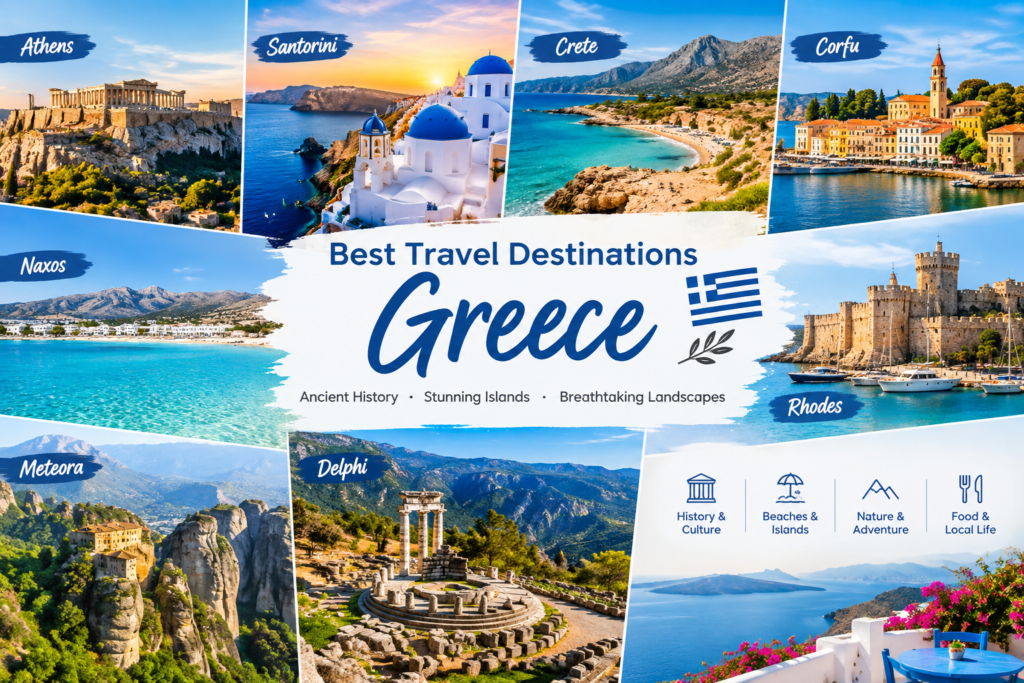

Greece is much more than a collection of famous islands. The country combines ancient archaeological sites, Mediterranean beaches, mountain landscapes, historic cities, traditional villages, distinctive regional food, and thousands of islands and islets. According to the Greek National Tourism Organization, Greece has around 6,000 islands and islets, although only 227 are inhabited.
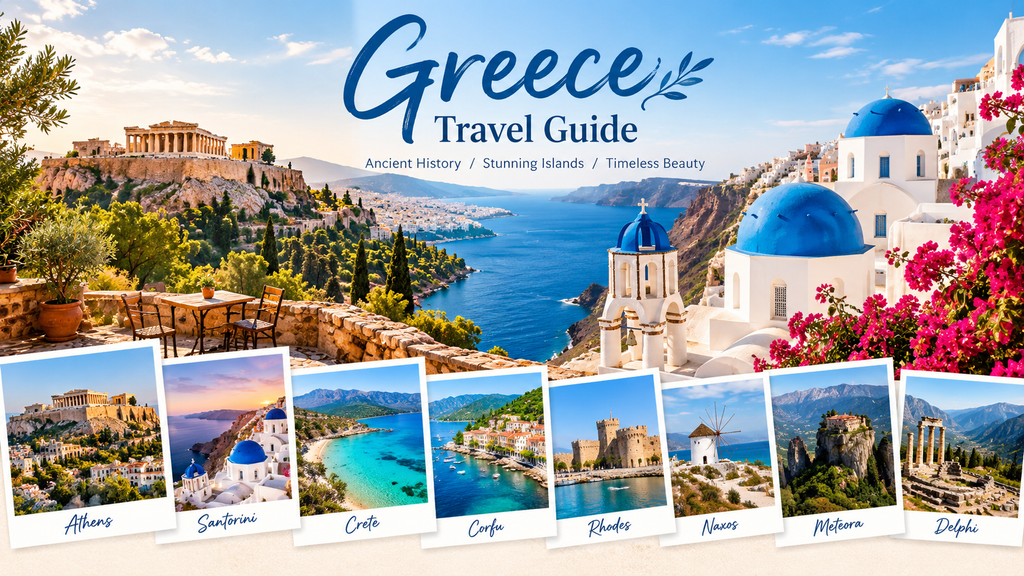
That diversity is what makes choosing among the best travel destinations Greece offers surprisingly difficult. A couple looking for dramatic sunsets may have very different priorities from a family wanting calm beaches. Someone interested in ancient history may prefer Athens or Delphi, while a traveler seeking hiking and local culture could find Crete more rewarding.
Greece also works well for different styles of travel. You can build a cultural city break around Athens, combine two or three islands, spend a week exploring Crete, or travel inland to places such as Meteora and Delphi. The best choice depends less on finding one universally perfect destination and more on matching a place with the experience you want.
Best travel destinations Greece for different types of trips
For first time visitors, Athens provides the strongest introduction to Greek history and contemporary city life. Santorini is known for its volcanic landscape, caldera views and distinctive villages, while Crete offers a much broader combination of beaches, archaeological sites, mountains, food and towns.
Corfu is particularly interesting for travelers who want lush scenery, beaches and European architectural influences. Rhodes combines medieval history with beaches and traditional settlements. Naxos offers sandy beaches, villages, food and outdoor activities without being limited to a single type of vacation.
For travelers who want something beyond the islands, Meteora and Delphi provide very different experiences centered on landscapes, spirituality and ancient Greek history. Greece has 21 properties inscribed on the UNESCO World Heritage List, including the Acropolis, Delphi, the Medieval City of Rhodes, the Old Town of Corfu and Meteora.
Athens
Athens is the natural starting point for many Greece trips because it combines ancient landmarks with the energy of a modern European capital. The city is centered around the Acropolis and its surrounding historic neighborhoods, but there is considerably more to experience beyond the major archaeological sites.
The Acropolis is the obvious highlight. Around it, visitors can explore historic streets, museums, cafés, restaurants and neighborhoods with very different personalities. The official tourism authority describes Athens as a city where ancient monuments, neoclassical architecture and contemporary urban life exist side by side.
History enthusiasts can spend several days exploring archaeological attractions and museums, while food lovers can use Athens as a base for discovering Greek cuisine. The city also works well as the beginning or ending point of an island hopping itinerary.
The Acropolis is accessible by public transportation, including the Acropolis Metro station and nearby transport connections.
Best for: History, culture, food, first time visitors and city breaks.
What to expect: A busy urban destination with major archaeological attractions, walkable historic areas and extensive dining and nightlife options.
Santorini
Santorini is among the most recognizable destinations in Greece, but its appeal is not limited to the famous views seen in photographs. The island was shaped by significant volcanic activity, creating the caldera, steep cliffs and unusual beaches that distinguish it from many other Greek islands.
Oia and Fira are the best known settlements for caldera scenery, architecture and sunset views. Santorini’s volcanic character is also visible along its coastline, where visitors can find black, red and white sand as well as dramatic rock formations.
Beyond sightseeing, Santorini has a distinctive food culture. Local specialties include fava, tomato fritters and dishes made with ingredients adapted to the island’s dry volcanic environment. Wine is also an important part of the destination’s identity.
Santorini is particularly suitable for couples, photographers and travelers interested in scenery. However, its popularity means that visitors should plan accommodation and transportation carefully, particularly during the busiest travel periods.
Best for: Couples, scenery, photography, sunsets and special occasions.
What to expect: Dramatic landscapes, famous viewpoints, volcanic beaches, restaurants and a highly developed tourism industry.
Crete
Crete is one of the most versatile choices among the best travel destinations Greece has to offer. Instead of feeling like a single resort destination, the island offers cities, beaches, mountains, archaeological sites, villages, gorges and distinctive regional cuisine.
Chania is particularly appealing for travelers who enjoy historic architecture and local atmosphere. Its old town, waterfront and traditional food scene provide a strong introduction to western Crete. The wider Chania region also has extensive coastline and mountain scenery, including the White Mountains.
Rethymno provides another combination of history and seaside relaxation. Its well preserved old town contains Venetian and Ottoman influences, while the city also has a long beach and a historic fortress overlooking the area.
Crete is also a strong destination for outdoor travelers. Hiking opportunities, mountain landscapes, beaches and rural villages make it possible to spend an entire trip exploring different parts of the island.
Best for: Families, food lovers, beaches, history, road trips and outdoor adventures.
What to expect: A large island that rewards spending several days in different regions rather than trying to see everything quickly.
Corfu
Corfu stands apart from many Greek islands because of its lush landscape and distinctive European influences. It belongs to the Ionian Islands, which are known for green scenery, rugged coastlines and a history shaped by different European powers.
The Old Town of Corfu is a major attraction and is recognized as a UNESCO World Heritage Site. Visitors can combine historic streets and fortresses with beaches, coastal drives and countryside excursions.
Paleokastritsa is one of the island’s better known coastal areas, with rocky formations, sea caves and turquoise water. Other beaches range from sandy shores to quieter coves, giving travelers several options depending on whether they want facilities or a more natural setting.
Corfu can suit travelers who want more greenery and architectural character than the classic dry Cycladic scenery associated with destinations such as Santorini and Mykonos.
Best for: Families, nature, beaches, history and relaxed island holidays.
What to expect: Green hills, varied beaches, historic architecture and a more lush landscape.
Rhodes
Rhodes offers a particularly interesting combination of medieval history, beaches and island scenery. Its Medieval City is a UNESCO World Heritage Site, and the island’s history reflects Byzantine, Crusader, Ottoman and Italian influences.
The Old Town is one of the main reasons to visit, but Rhodes is not simply a historical destination. Lindos provides a picturesque combination of traditional architecture, beaches and an ancient acropolis. Elsewhere, visitors can find coastal resorts, pine covered landscapes and quieter villages.
The island also has options for water sports and outdoor activities. Prasonisi is associated with surfing, while several coastal areas offer diving and other water based activities.
Rhodes works particularly well for travelers who do not want to choose between history and a traditional beach holiday.
Best for: History, beaches, families, couples and longer island stays.
What to expect: A substantial island with historical attractions, beaches, resorts and rural areas.
Naxos
Naxos is an excellent option for travelers who want a more balanced Greek island experience. It is the largest and most fertile island in the Cyclades, with beaches, villages, food traditions and mountain scenery.
The beaches are one of its strongest attractions. Agios Georgios has relatively shallow waters and convenient access to the island’s main town, while Agios Prokopios, Agia Anna and Plaka provide different beach experiences farther south.
Naxos also provides opportunities for travelers who enjoy exploring beyond the coast. Villages, agricultural landscapes, historic monuments and mountain areas create a destination that feels broader than a conventional beach resort.
For travelers comparing Greek islands, Naxos can make sense when they want beaches but also want food, culture and opportunities for exploration.
Best for: Families, beaches, food, villages and active travelers.
What to expect: Sandy beaches, traditional communities, local food and a varied island landscape.
Meteora
Meteora provides a completely different experience from the Greek islands. The destination is famous for monasteries built among dramatic sandstone formations. UNESCO describes Meteora as a remarkable monastic landscape where monks settled from the eleventh century onward and monasteries were constructed among the towering rock formations.
The landscape is the main attraction, but the historical and religious significance adds considerable depth to a visit. Travelers can explore monasteries, viewpoints and surrounding countryside while learning about the area’s long monastic tradition.
Meteora is especially valuable for travelers who want to see another side of Greece beyond beaches and island resorts.
Best for: History, photography, nature, culture and scenic road trips.
What to expect: Mountain landscapes, monasteries, viewpoints and a quieter atmosphere than major island destinations.
Delphi
Delphi is another essential destination for travelers interested in ancient Greece. The archaeological site sits between dramatic rocks on Mount Parnassus and was once a major religious center associated with the oracle of Apollo. UNESCO identifies Delphi as an important pan Hellenic sanctuary and a symbol of unity in the ancient Greek world.
The setting is an important part of the experience. Rather than being surrounded by a modern city, the archaeological remains are integrated into a mountainous landscape.
Delphi works well as a day trip from Athens or as part of a wider mainland itinerary. Travelers interested in Greek mythology, archaeology and ancient history will find considerably more depth here than a simple photo stop can provide.
Best for: Ancient history, archaeology, mythology and scenic mainland travel.
What to expect: Archaeological ruins, museum collections, mountain scenery and a strong connection with ancient Greek culture.
Choosing the right Greek destination
Choosing among the best travel destinations Greece offers becomes easier when you start with the type of trip rather than the destination’s popularity.
For ancient history and museums, Athens and Delphi are strong choices. For iconic island scenery, Santorini offers a distinctive volcanic landscape. For a broad vacation with beaches, food, mountains and history, Crete provides exceptional variety.
Families may appreciate Naxos and Corfu because of their combination of beaches and other activities. Couples often look toward Santorini, although quieter islands can provide a more relaxed atmosphere. Travelers who want medieval history should consider Rhodes, while those seeking dramatic mainland scenery should look at Meteora.
It is also worth considering how much time you have. Trying to combine Athens, Santorini, Crete, Rhodes and Corfu into one short trip can create more time in airports, ports and vehicles than time actually experiencing Greece.
Best time to visit Greece
Greece has a Mediterranean climate with plenty of sunshine, generally mild temperatures and relatively limited rainfall, although conditions vary considerably between coastal, island and mountainous areas.
Summer is the traditional season for beach holidays, but it also brings hot, dry conditions and seasonal winds known as the meltemi in parts of the country. Mountain areas can be noticeably cooler.
Spring and autumn can be particularly appealing for travelers who want a combination of sightseeing and outdoor activities without making the trip entirely about hot weather. These seasons can also work well for exploring archaeological sites and cities.
Winter is quieter and can suit travelers interested in mainland cities, culture and mountain destinations. However, some seasonal island services and tourism businesses may operate differently outside the main season.
Before traveling, check conditions for the specific destination rather than assuming the entire country will have identical weather.
Getting around Greece
Athens is the country’s main international gateway and provides domestic connections to destinations across Greece.
For island travel, ferries are an important part of the transportation network, although routes and schedules vary according to destination and season. Domestic flights can save time when traveling longer distances, especially to larger islands such as Crete and Rhodes.
On larger islands, renting a car can provide considerably more flexibility for visiting beaches, villages and rural areas. In cities and major tourist areas, buses, taxis and walking can often cover the most important attractions.
The key is to avoid planning too many destinations into one itinerary. A slower trip with two or three well chosen bases can provide more meaningful time in each location.
What to expect from a trip to Greece
Greece offers considerably more variety than its famous postcard image suggests. You may spend one morning walking through ancient ruins and the afternoon swimming from a Mediterranean beach. Another day could involve a mountain village, a local taverna and a sunset overlooking the sea.
Food is an important part of the experience. Greek cuisine varies by region, so travelers should look beyond internationally familiar dishes and try local specialties wherever they are staying.
Costs also vary significantly. Major destinations and highly sought after accommodation can be considerably more expensive than smaller mainland towns or less famous islands. Accommodation, transportation, dining and activities should therefore be researched for the specific destination and travel dates.
One practical advantage of Greece is the range of experiences available at different budgets. A trip does not have to revolve around luxury resorts. Travelers can combine free beaches, walking routes, public transport, local restaurants and historical attractions with selected paid experiences.
Is Greece worth visiting?
For travelers who want variety, Greece offers a combination that is difficult to reduce to one experience. The country provides ancient history, islands, beaches, mountains, food and distinctive regional cultures within a relatively compact travel area.
The biggest challenge is choosing where to go. Santorini may be ideal for someone prioritizing dramatic scenery, while another traveler may find more value in the broader experiences available in Crete. Athens is particularly useful for cultural exploration, while Rhodes and Corfu offer different combinations of history and island life.
Greece is therefore worth considering when your ideal trip involves more than sitting beside a beach. With thoughtful planning, you can create an itinerary that combines cultural attractions, natural scenery, local food and relaxation without trying to see the entire country in one visit.
Frequently asked questions
What are the best travel destinations Greece has for first time visitors?
Athens, Santorini and Crete are common starting points because they offer very different experiences. Athens focuses heavily on history and city culture, Santorini on volcanic scenery and island views, while Crete combines beaches, food, archaeological attractions and outdoor experiences.
Which Greek destination is best for beaches?
There is no single best beach destination for every traveler. Naxos offers extensive sandy beaches, Corfu has varied coastal scenery and Crete provides a huge range of beaches across a large island. Santorini is more notable for its unusual volcanic coastline than conventional tropical style beaches.
Is Santorini worth visiting?
Santorini can be worthwhile for travelers interested in caldera landscapes, distinctive architecture, sunsets, food and volcanic scenery. It is particularly different from other Greek islands because of its geological setting.
Is Crete good for a family vacation?
Crete can work very well for families because it combines beaches with cities, villages, historical attractions and outdoor activities. Its size also means families can choose between different regions depending on their preferred pace.
How many days should I spend in Greece?
The ideal length depends on how much of the country you want to explore. A short trip can focus on Athens and one island, while a longer vacation allows time for several destinations. Avoid adding too many islands simply to increase the number of places visited.
What is the best month to visit Greece?
Spring and autumn can be comfortable for sightseeing and outdoor exploration, while summer is particularly popular for beach holidays. Greece has significant regional climate variation, so the best period depends on the destinations and activities in your itinerary.
Is Greece expensive for tourists?
Greece has a wide range of travel costs. Famous islands and high demand periods can be expensive, while mainland destinations and smaller islands can offer different price levels. Accommodation and transportation are usually the biggest factors to research before booking.
Should I visit Greek islands or mainland Greece?
Choose islands if beaches, coastal scenery and island culture are central to your plans. Choose mainland destinations if ancient history, mountains, cities and archaeological sites are more important. A combination of Athens with one island can provide a balanced first trip.
Conclusion
The best travel destinations Greece offers are not limited to the famous names found on postcards. Athens brings ancient history and modern city life, Santorini provides extraordinary volcanic scenery, Crete delivers remarkable variety, while Corfu, Rhodes and Naxos offer their own combinations of beaches, culture and local character. Mainland destinations such as Meteora and Delphi add another dimension for travelers willing to explore beyond the islands.
The right destination ultimately depends on the kind of journey you want to create. For history, consider Athens and Delphi. For iconic island scenery, consider Santorini. For a longer and more varied holiday, Crete is an especially flexible choice. For beaches combined with a broader island experience, Naxos and Corfu are worth considering, while Rhodes is particularly interesting for travelers who want medieval heritage alongside the sea.
Greece rewards travelers who give themselves enough time to experience a destination rather than simply collecting locations. Choose fewer places, match them to your interests, and leave room for local food, unexpected villages, coastal walks and cultural discoveries. With that approach, Greece can become much more than a typical island holiday and instead become a genuinely varied travel experience.