

Introduction: Europe Freezes US Travel: What Is Really Happening?
Europe freezes US travel—this phrase has appeared in online searches, social media discussions, and attention-grabbing headlines, leaving many American travelers wondering whether their European vacation plans are suddenly at risk.
Could Americans be banned from visiting France, Italy, Spain, Germany, or other popular European destinations?
The short answer is no.
Europe has not introduced a general ban preventing American tourists from traveling to Europe. However, the way non-EU travelers enter parts of Europe is changing. New digital border systems, biometric registration, and future travel authorization requirements are making European travel more structured than it was in the past.
For travelers planning a European vacation, understanding these changes is extremely important.
This guide explains what the Europe freezes US travel headline really means, why people are searching for it, and what American travelers should know before booking their next trip.
Table of Contents
- What Does Europe Freezes US Travel Mean?
- Has Europe Actually Banned American Travelers?
- The New European Entry/Exit System
- What Is ETIAS?
- Why Are Travelers Concerned?
- How Could the Changes Affect American Tourists?
- Tips for Traveling to Europe in 2026
- Popular European Destinations for US Travelers
- Frequently Asked Questions
- Final Thoughts
What Does Europe Freezes US Travel Actually Mean?
The phrase Europe freezes US travel can be misleading.
For many people, the headline immediately suggests that European countries have closed their borders to Americans. That is not the reality.
Instead, the phrase is generally connected to concerns about:
- New European border procedures
- Biometric registration
- Longer immigration processing times
- Future ETIAS travel authorization
- Changing international travel policies
- Confusion caused by viral travel headlines
American travelers can still visit many European destinations, provided they meet the relevant entry requirements.
The biggest change is that crossing European borders is becoming more digital.
Instead of relying entirely on traditional passport stamps, the European Entry/Exit System records information electronically for eligible non-EU travelers. The system includes travel document information and biometric data during border processing.
So, Europe freezes US travel does not mean Europe has frozen American tourism.
It means travelers need to pay closer attention to changing travel requirements.
Has Europe Actually Banned American Travelers?
The Truth Behind Europe Freezes US Travel
No broad European travel ban on American tourists is currently represented by the official EU travel information behind these new systems.
US citizens have traditionally been able to visit many European countries for short stays without applying for a traditional tourist visa. However, travel procedures are evolving.
This is why travelers should avoid making decisions based only on dramatic headlines.
Before canceling a vacation, always check official travel information.
Reliable sources include:
- European Commission Migration and Home Affairs
- U.S. Department of State Travel Information for Europe
- European travel information on EES
Official information is especially important because social media posts can oversimplify complicated immigration and border policies.
Europe Freezes US Travel and the New Entry/Exit System
One of the biggest reasons behind discussions about Europe freezes US travel is the European Entry/Exit System, commonly known as EES.
The system modernizes how eligible non-EU travelers are registered when entering and leaving participating European countries.
What Does EES Do?
The Entry/Exit System digitally records information related to travelers entering and leaving the Schengen area for short stays.
Depending on the traveler and border procedure, information collected can include:
- Passport and travel document information
- Facial images
- Fingerprints
- Entry information
- Exit information
The European Commission states that EES is designed to modernize and digitize border management for short-stay travelers from outside the EU.
For many travelers, the biggest difference will simply be the border experience.
A trip to Europe may involve additional registration during the first encounters with the system.
Could the New System Cause Longer Border Lines?
Potential border delays have become one of the biggest concerns surrounding the new procedures.
During busy travel periods, airports and border crossings process enormous numbers of international visitors.
New technology and biometric registration can sometimes increase processing time, particularly during implementation periods.
Travel industry organizations have warned that significant and persistent border delays could discourage international visitors from traveling to Schengen destinations.
This does not mean travelers should avoid Europe.
It simply means planning ahead is more important than ever.
Smart Travel Tip
Arrive at the airport early and allow additional time for:
- Passport control
- Immigration procedures
- Biometric registration
- Security checks
- Unexpected queues
What Is ETIAS and Why Does It Matter?
Another reason the phrase Europe freezes US travel has become popular is the upcoming ETIAS system.
ETIAS stands for the European Travel Information and Authorisation System.
It is important to understand that ETIAS is not the same as a traditional visa.
The system is intended to apply to visa-exempt travelers visiting participating European countries for short stays once it becomes operational.
According to official EU information, ETIAS is scheduled for introduction in the last quarter of 2026, with the exact operational timing to be officially communicated.
For American travelers, this means future European trips may require an additional online travel authorization step.
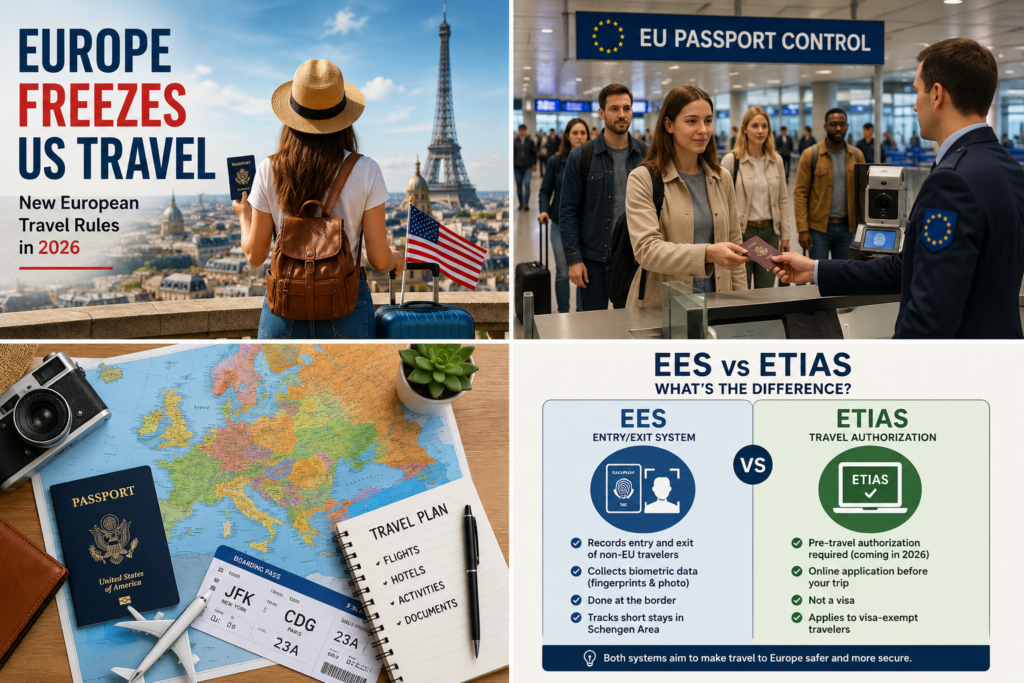
EES vs ETIAS: What Is the Difference?
Many travelers confuse these two systems.
EES
EES focuses on the border entry and exit process for eligible non-EU short-stay travelers.
ETIAS
ETIAS is a travel authorization system for visa-exempt travelers before they begin their journey, once the system becomes operational.
Both systems are part of Europe’s broader effort to modernize border management.
Understanding this difference can prevent a lot of confusion.
Why Are American Travelers Concerned?
The Europe freezes US travel headline has created concern because Europe is one of the world’s most popular travel regions for American tourists.
Millions of travelers dream about visiting destinations such as:
- Paris
- Rome
- Barcelona
- Amsterdam
- Athens
- Prague
- Lisbon
When travelers hear words like freeze, restriction, or ban, they naturally worry about canceled vacations.
However, the reality is usually more complicated than a viral headline.
Travel policies change regularly around the world.
New border technology does not automatically mean that tourism has stopped.
Instead, travelers need accurate information and proper preparation.
How Europe Freezes US Travel Could Affect Your Vacation Plans
While there is no general European travel freeze for Americans, changing border procedures may affect the travel experience.
Here are some things travelers may notice.
1. More Digital Border Procedures
Travel is becoming increasingly digital.
Traditional passport stamping is being replaced or supplemented by electronic systems in participating border processes.
2. Biometric Registration
Eligible travelers may need to provide biometric information during border procedures.
3. Longer Processing Times
Busy airports could experience delays, especially when new systems are being implemented.
4. More Planning Before Travel
Future travelers may need to confirm whether ETIAS or other authorization requirements apply to their trip.
5. Increased Importance of Official Information
Travelers should check official sources shortly before departure because international travel requirements can change.
7 Smart Tips for American Travelers Visiting Europe in 2026
If you are planning a European vacation, these tips can help make your journey smoother.
1. Check Your Passport Early
Make sure your passport meets the entry requirements for your destination.
Do not wait until the week before your trip to check its validity.
2. Follow Official Travel Sources
Avoid relying entirely on TikTok videos, Instagram posts, or viral headlines.
Check official government and European Union travel websites.
3. Arrive Early at the Airport
International travel can involve long lines.
Give yourself extra time.
4. Research Every Country on Your Itinerary
Europe is not one single country.
Different destinations may have different requirements and procedures.
5. Understand the Schengen Area
Many European countries follow shared Schengen travel rules.
Knowing how the system works can make multi-country trips easier to understand.
6. Watch for ETIAS Updates
Before traveling later in 2026 or afterward, check whether ETIAS has become operational and whether it applies to your nationality and destination.
7. Don’t Panic Over Clickbait
The phrase Europe freezes US travel sounds dramatic.
Always investigate the facts before changing your travel plans.
Popular European Destinations American Travelers Still Love
Despite changing border systems, Europe remains one of the most exciting travel regions in the world.
France
France offers iconic landmarks, museums, food, history, and beautiful countryside.
Internal Link Suggestion:
Read our guide: Best Places to Visit in France
Italy
Italy continues to attract travelers with Rome’s history, Venice’s canals, and the beautiful Amalfi Coast.
Internal Link Suggestion:
Read: Best Places to Travel in Italy
Spain
Spain is known for incredible architecture, beaches, food, and vibrant cities.
Internal Link Suggestion:
Read: Best Places to Visit in Spain
Portugal
Portugal is an excellent choice for travelers interested in coastal scenery, historic cities, and unique culture.
Internal Link Suggestion:
Read: Portuguese Phrases for Travel
Greece
Greece offers ancient history, beautiful islands, and unforgettable Mediterranean views.
Internal Link Suggestion:
Read: Best Greek Islands to Visit
Should You Cancel Your European Vacation?
For most travelers, a dramatic headline alone should not be a reason to cancel a trip.
Instead:
- Check official entry requirements.
- Confirm your passport status.
- Review airline information.
- Check your destination country’s travel guidance.
- Allow extra time at the airport.
Travel regulations can change, but preparation helps travelers avoid unnecessary stress.
The phrase Europe freezes US travel should encourage people to research their trip—not panic.
Frequently Asked Questions
Is Europe freezing US travel?
No broad European ban on American tourists is indicated by the official EU information about the current EES and upcoming ETIAS systems. The major changes involve border procedures and future travel authorization requirements.
Can Americans still travel to Europe?
Yes, American citizens can travel to European destinations according to the applicable entry requirements for their destination and travel circumstances.
Do Americans need a visa for Europe?
For many short-term tourist visits, US citizens have traditionally been visa-exempt. However, travelers should always check official requirements for their specific destination.
What is EES?
EES is the European Entry/Exit System, which digitally records eligible non-EU travelers entering and leaving participating European countries for short stays.
What is ETIAS?
ETIAS is a European travel authorization system planned for visa-exempt travelers once operational. It is not the same as a traditional visa.
Will European travel become more difficult?
Travel may involve more digital procedures and additional planning, but new border technology does not automatically mean Europe is closed to tourists.
Final Thoughts: The Truth About Europe Freezes US Travel
The headline Europe freezes US travel sounds alarming, but the reality is much less dramatic.
Europe has not broadly shut its borders to American tourists.
Instead, European travel is entering a new era of digital border management.
The Entry/Exit System is changing how eligible non-EU travelers are processed at borders, while ETIAS is expected to introduce an additional travel authorization requirement for visa-exempt visitors when it becomes operational.
For travelers, the best strategy is simple:
Stay informed. Plan ahead. Check official sources. And don’t let clickbait headlines ruin your dream European vacation.
Europe continues to offer extraordinary history, culture, food, architecture, and unforgettable travel experiences.
The rules may evolve—but the adventure is still waiting.
Recommended External Resources
For the latest official information, readers can check: