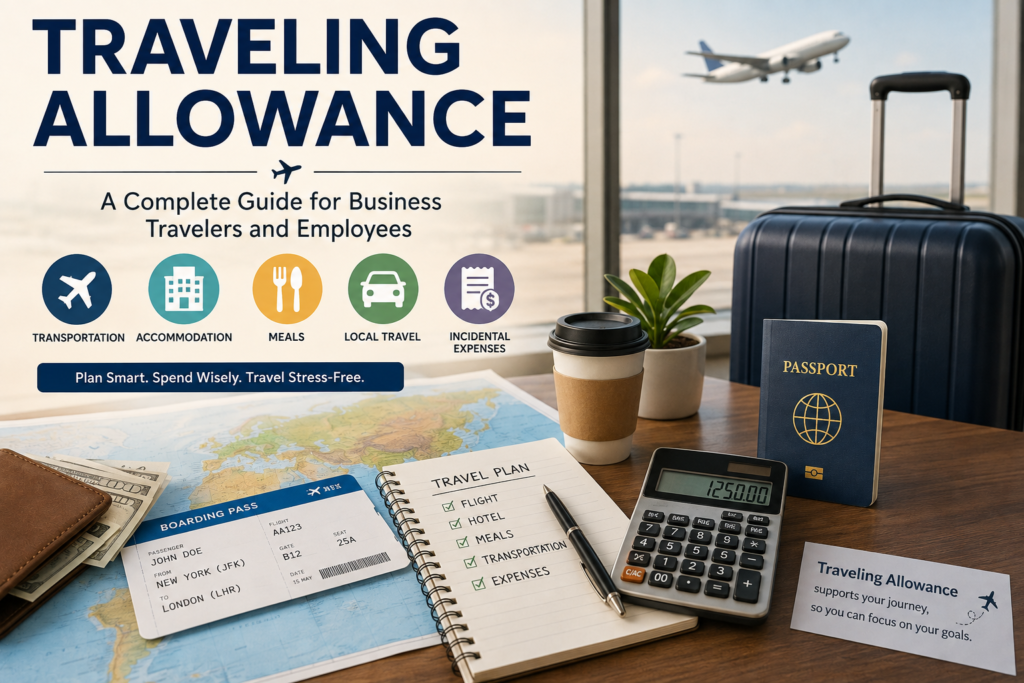

Traveling Allowance: Everything You Need to Know
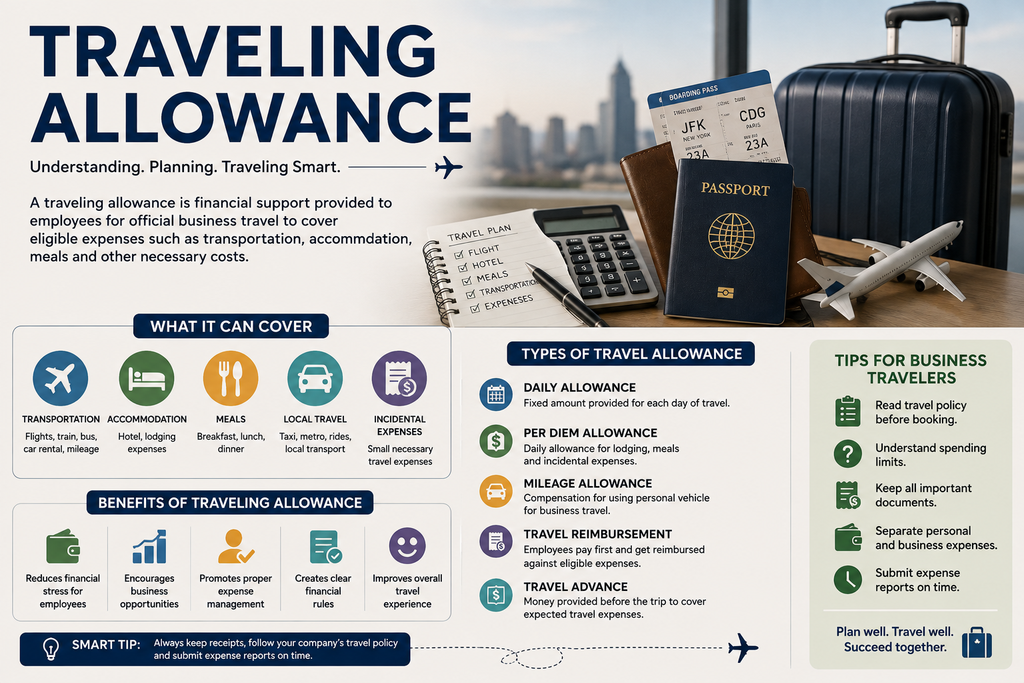
Traveling allowance is an important benefit that can make business trips and work-related travel much easier for employees. Traveling for work often involves expenses such as transportation, accommodation, meals, and other necessary costs. Without financial support, these expenses can quickly become stressful.
That is where a traveling allowance comes in.
A company, employer, or organization may provide a fixed allowance or reimburse eligible travel expenses when an employee needs to travel for official work. The exact rules, amount, and expenses covered can vary depending on the employer, organization, country, and travel policy.
Whether you are a new employee preparing for your first business trip or simply want to understand how travel expenses work, this guide explains everything you need to know about traveling allowance.
Table of Contents
- What Is a Traveling Allowance?
- How Does a Traveling Allowance Work?
- What Expenses Can a Traveling Allowance Cover?
- Different Types of Traveling Allowance
- 7 Powerful Benefits of Traveling Allowance
- Traveling Allowance vs Travel Reimbursement
- How to Manage Your Traveling Allowance
- Tips for Business Travelers
- Frequently Asked Questions
- Final Thoughts
What Is a Traveling Allowance?
A traveling allowance is money provided to an employee or traveler to help cover eligible expenses connected with official or business-related travel.
Instead of paying every expense personally, the traveler may receive financial support from their employer or organization.
The allowance may cover costs such as:
- Transportation
- Hotel accommodation
- Meals
- Local transportation
- Incidental expenses
- Mileage or fuel costs
The exact coverage depends on the organization’s travel policy.
Some employers provide a fixed amount for each day of travel. Others require employees to pay for expenses first and then submit receipts for reimbursement.
In the United States, a common system is known as per diem, which refers to an allowance for lodging, meals, and incidental expenses during official travel. The specific rates and rules can vary by location and organization.
How Does a Traveling Allowance Work?
The process behind a traveling allowance can be different from one organization to another.
However, most travel policies follow a similar structure.
Step 1: The Business Trip Is Approved
The employee receives approval to travel for work.
This could include:
- Attending a business meeting
- Visiting a client
- Participating in a conference
- Attending training
- Visiting another office
- Completing an official assignment
Step 2: The Travel Budget Is Confirmed
The employer explains what expenses are covered.
For example, the company may pay for flights and accommodation directly while providing a daily amount for meals and local expenses.
Step 3: The Employee Travels
During the trip, the employee follows the company’s travel policy and spends the allowance on eligible expenses.
Step 4: Expenses May Need to Be Reported
Depending on the policy, the traveler may need to submit:
- Receipts
- Hotel invoices
- Transportation tickets
- Expense reports
- Travel dates
- Details about the business purpose of the trip
Proper documentation is an important part of many business travel reimbursement systems.
What Expenses Can a Traveling Allowance Cover?
A traveling allowance does not always cover the same expenses.
Every employer can have different rules.
However, here are some of the most common expenses.
1. Transportation
Transportation is often one of the biggest business travel expenses.
A traveling allowance may help cover:
- Flights
- Train tickets
- Bus tickets
- Rental vehicles
- Mileage
- Fuel
- Airport transportation
Employees should always check which transportation options are approved before booking.
2. Accommodation
When a business trip requires an overnight stay, accommodation may be covered.
This can include:
- Hotels
- Business accommodation
- Approved lodging
Some employers book hotels directly, while others provide a reimbursement or allowance.
3. Meals
Many travel policies provide money for meals during official trips.
This may include:
- Breakfast
- Lunch
- Dinner
- Basic food expenses
However, companies may set daily limits.
In government travel systems, meal and incidental expense allowances can be calculated using established per diem rates.
4. Local Transportation
Business travelers often need transportation after arriving at their destination.
Eligible expenses may include:
- Taxis
- Public transportation
- Airport transfers
- Approved ride services
- Local business transportation
Always check your organization’s policy before assuming an expense is covered.
5. Incidental Expenses
Some traveling allowance policies also include small necessary expenses related to official travel.
These rules vary significantly depending on the employer.
That is why reading the travel policy before leaving is extremely important.
Different Types of Traveling Allowance
Not every organization uses the same payment system.
Here are some common types.
Daily Allowance
A daily allowance provides a fixed amount of money for each eligible day of travel.
The traveler can use the allowance for approved daily expenses according to the organization’s rules.
Per Diem Allowance
Per diem generally refers to a daily allowance for travel-related expenses such as lodging, meals, and incidental costs.
Government per diem systems often establish different rates based on travel location because costs can vary between destinations.
Mileage Allowance
Employees who use their own vehicle for approved business travel may receive mileage reimbursement or an allowance based on the organization’s policy.
The rate and eligibility rules can vary.
Travel Reimbursement
Under a reimbursement system, the employee pays eligible expenses and later submits documentation to receive repayment.
Receipts and expense records are often required.
Travel Advance
Some organizations provide money before the trip begins.
The employee can use the advance for approved business travel expenses and may later need to account for how the money was spent.
The handling of excess advances depends on the employer’s policy and applicable rules.
7 Powerful Benefits of Traveling Allowance
A well-planned traveling allowance can benefit both employees and organizations.
1. Reduces Financial Stress
Business travel can be expensive.
Employees should not have to worry unnecessarily about paying large official expenses from their personal budget.
A travel allowance can make work trips financially easier to manage.
2. Makes Business Travel More Accessible
Employees may be required to travel for meetings, training, conferences, or assignments.
Financial support makes these opportunities more accessible.
3. Helps Employees Plan Their Budget
Knowing how much financial support is available allows travelers to plan accommodation, meals, and transportation more responsibly.
4. Encourages Proper Expense Management
A clear policy helps employees understand which expenses are eligible.
This can reduce confusion and improve financial organization.
5. Supports Professional Opportunities
Business travel can provide valuable opportunities to:
- Meet clients
- Attend conferences
- Learn new skills
- Build professional relationships
- Represent an organization
A traveling allowance helps make these opportunities possible.
6. Creates Clear Financial Rules
A good travel policy explains:
- What is covered
- Spending limits
- Required approvals
- Receipt requirements
- Reimbursement procedures
Clear rules benefit both employees and employers.
7. Improves the Overall Travel Experience
When employees know that legitimate business expenses are properly handled, they can focus more effectively on their work.
This creates a smoother and more organized travel experience.
Traveling Allowance vs Travel Reimbursement
These terms are sometimes used interchangeably, but they can work differently.
Traveling Allowance
A traveling allowance is usually a fixed amount provided to help cover eligible travel expenses.
For example, an employee may receive a daily amount for meals and incidental expenses.
Travel Reimbursement
Travel reimbursement usually involves paying the actual eligible costs and receiving the money back after submitting the required documents.
The Main Difference
Allowance: A fixed amount may be provided.
Reimbursement: Actual eligible expenses are repaid.
The system used depends on the employer’s travel policy.
How to Manage Your Traveling Allowance Effectively
Receiving a traveling allowance does not mean you should spend without planning.
Smart travel management is important.
Create a Travel Budget
Before leaving, estimate your expected costs.
Think about:
- Transportation
- Accommodation
- Meals
- Local travel
- Other approved expenses
Keep Important Documents
Even if your employer provides a fixed allowance, keeping travel documents can be helpful.
Save:
- Tickets
- Hotel confirmations
- Receipts
- Booking details
- Expense records
Documentation requirements can depend on the specific allowance and employer policy.
Understand Spending Limits
Some organizations have limits for:
- Hotel costs
- Daily meals
- Transportation
- Local travel
Always know these limits before making expensive bookings.
Separate Personal and Business Expenses
One of the smartest habits for business travelers is keeping personal and official expenses separate.
This makes reporting much easier.
6 Smart Tips for Using Your Traveling Allowance
1. Read the Travel Policy Before Booking
Never assume every travel expense will be covered.
Check the policy first.
2. Ask Questions Before Your Trip
If something is unclear, ask your manager or HR department.
It is much easier to clarify rules before spending money.
3. Book Approved Travel Options
Some companies have preferred airlines, hotels, or transportation providers.
Follow the approved booking process.
4. Keep Digital Copies of Documents
Take photos or digital copies of important receipts and invoices.
This can prevent problems if the original document is lost.
5. Don’t Exceed Your Budget Unnecessarily
A traveling allowance should be managed responsibly.
Plan your spending and avoid unnecessary costs.
6. Submit Your Expense Report on Time
If your organization requires an expense report, submit it within the required deadline.
Delays can slow down reimbursement.
Traveling Allowance for International Travel
International business travel can involve additional expenses.
Depending on the organization’s policy, travelers may need support for:
- International flights
- Hotels
- Local transportation
- Meals
- Currency-related costs
- Travel documentation requirements
International travel policies may be different from domestic travel policies.
For example, official U.S. government travel rates for foreign destinations are established separately from domestic per diem rates.
Before an international trip, always check:
- Passport validity
- Visa requirements
- Travel insurance requirements
- Company travel policies
- Destination-specific rules
Internal Link Suggestion:
👉 Read our guide on Best Airlines for International Travel
Internal Link Suggestion:
👉 Read our guide on Best Travel Wallets for Every Type of Traveler
Why Every Company Needs a Clear Travel Policy
A clear travel policy can prevent misunderstandings.
Employees should know exactly:
- Who approves travel
- Which expenses are covered
- What the spending limits are
- Whether receipts are required
- How reimbursement works
- When reports must be submitted
Organizations with clear policies can make business travel easier for everyone involved.
The U.S. General Services Administration provides an example of a structured approach to official travel management, including per diem, transportation, and lodging policies.
Frequently Asked Questions About Traveling Allowance
What is a traveling allowance?
A traveling allowance is financial support provided to help cover eligible expenses related to official or business travel.
What does a traveling allowance usually cover?
It may cover transportation, accommodation, meals, local transportation, and other approved travel expenses.
Is traveling allowance the same as reimbursement?
Not always. An allowance may provide a fixed amount, while reimbursement generally repays eligible actual expenses.
Do I need to keep receipts?
It depends on the employer’s travel policy and the type of allowance. Keeping records is generally a good practice.
Can I use my traveling allowance for personal expenses?
Usually, travel allowances are intended for approved business or official expenses. Always follow your organization’s policy.
Does every company provide a traveling allowance?
No. Travel benefits and reimbursement policies vary between companies and organizations.
What is per diem?
Per diem is generally a daily allowance used to cover eligible travel expenses such as lodging, meals, and incidental costs under applicable policies.
Final Thoughts on Traveling Allowance
A traveling allowance can make business and official travel much easier by helping employees manage eligible expenses.
Whether the system uses a daily allowance, per diem, mileage payment, travel advance, or reimbursement, the most important thing is understanding the organization’s travel policy.
Before every trip, remember to:
- Check what expenses are covered
- Understand your spending limits
- Keep required documents
- Separate personal and business expenses
- Follow the approved travel process
- Submit reports on time
With proper planning, a traveling allowance can reduce financial stress and help create a smoother, more productive travel experience.
Business travel should be about completing important work and exploring professional opportunities—not worrying unnecessarily about how every approved expense will be paid.
External Resources
For readers who want to learn more about official travel allowance and per diem systems:
- IRS – Travel, Gift, and Car Expenses: https://www.irs.gov/publications/p463
- U.S. General Services Administration – Travel Policy: https://www.gsa.gov/policy-regulations/policy/travel-management-policy-overview
- GSA Per Diem Frequently Asked Questions: https://www.gsa.gov/travel/plan-a-trip/per-diem-rates/faqs