
Introduction
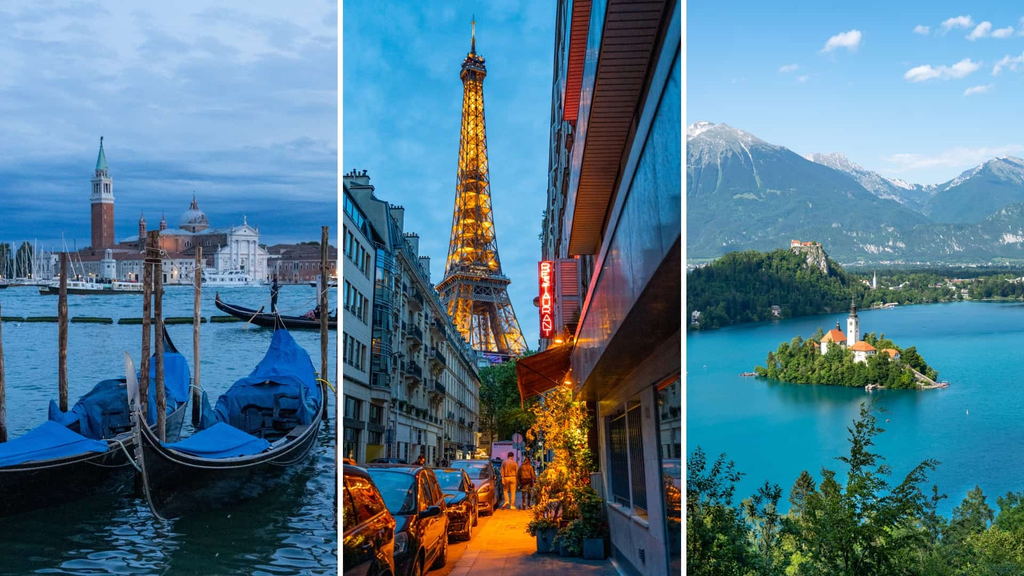
Europe can look deceptively simple on a map. Countries sit close together, high speed trains connect major cities, and it is possible to wake up in one country and have dinner in another. But planning a good European holiday is less about seeing as many places as possible and more about choosing the right combination of destinations, travel pace, seasons, and experiences.
This Europe travel guide is designed to help with exactly that. Whether you are planning your first European vacation, a two week city break, a longer backpacking trip, or a scenic rail journey, the key is to build an itinerary that leaves enough room to actually enjoy the places you visit.
Europe offers extraordinary variety within relatively short distances. You can combine historic cities such as Rome and Paris with Alpine landscapes, Mediterranean beaches, medieval towns, Scandinavian scenery, wine regions, museums, castles, and some of the world’s most celebrated food cultures. The challenge is deciding what belongs on your particular trip.
Choosing Where to Go in Europe
There is no single best European destination. The right choice depends heavily on what you want from the trip.
For history and architecture
Italy, France, Greece, Spain, Austria, the Czech Republic, and the United Kingdom are particularly rewarding for travelers interested in historic buildings, museums, archaeological sites, royal palaces, and old towns.
Rome is an obvious choice for ancient history, while Florence is ideal for Renaissance art and architecture. Paris combines monumental landmarks with museums and historic neighborhoods. Athens offers a direct connection to classical Greece, while Prague provides a remarkably atmospheric historic center.
If history is your main interest, resist the temptation to visit six or seven countries in one trip. Spending several days exploring one city and taking day trips into the surrounding region will usually produce a richer experience.
For beaches and warm weather
Southern Europe is the natural starting point for a beach focused holiday. Spain, Portugal, Italy, Greece, Croatia, Malta, and parts of southern France offer a wide range of coastal experiences.
Greece works particularly well for travelers who want a mixture of ancient sites, islands, swimming, and relaxed evenings. Croatia combines historic coastal towns with clear Adriatic waters, while Portugal’s Algarve offers dramatic coastlines and beach towns.
Spain is especially versatile because a trip can combine beaches with major cities, food, nightlife, and cultural attractions.
For mountains and outdoor adventures
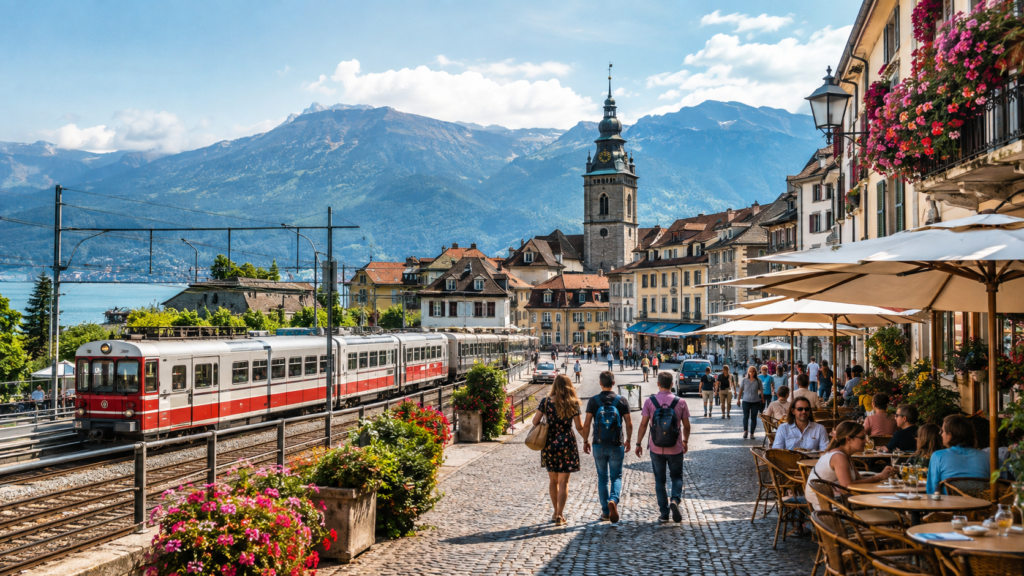
Switzerland, Austria, Norway, Slovenia, France, Italy, and parts of the Balkans are excellent choices for hiking, skiing, lakes, mountain scenery, and scenic train journeys.
Switzerland is famous for its dramatic Alpine landscapes and highly developed rail network. Norway is particularly appealing for fjords and outdoor adventures, while Slovenia offers mountains, lakes, forests, and compact distances that make it easy to explore without spending excessive time in transit.
For food and culture
Italy, France, Spain, Portugal, Greece, and Central Europe are especially rewarding for travelers who consider food an important part of the journey.
Rather than treating meals as something to fit between attractions, make local food part of your itinerary. A neighborhood market, family run restaurant, bakery, regional wine area, or traditional food tour can reveal more about a destination than another hour spent rushing between landmarks.
Best Time to Visit Europe
Europe is a year round destination, but the experience changes dramatically with the seasons.
Spring
Spring is one of the most appealing periods for a European vacation. Temperatures are generally comfortable, landscapes become greener, and many destinations are less crowded than during the peak summer months.
April through June can be particularly attractive for city sightseeing. Southern Europe may already feel quite warm by late spring, while northern destinations can still have cooler weather.
Summer
Summer brings long days, warm weather, beach season, festivals, and the highest demand in many popular destinations.
July and August are particularly busy in major tourist centers. Famous attractions can become crowded, accommodation prices often rise, and popular beaches may feel very different from the quieter experience travelers imagine.
Summer is still an excellent time for northern Europe, mountain regions, and travelers who prioritize outdoor activities. For Mediterranean destinations, however, consider whether you are comfortable with heat and crowds before committing to a mid summer itinerary.
Autumn
September and October can be excellent months for European travel. Summer crowds begin to decline, temperatures often become more comfortable, and southern destinations can retain plenty of sunshine.
Autumn is especially attractive for food and wine trips, city breaks, countryside drives, and cultural sightseeing.
Winter
Winter transforms Europe into a completely different destination. Christmas markets, festive decorations, snow-covered mountain towns, skiing, museums, and shorter queues at some attractions can make the season surprisingly rewarding.
The trade off is reduced daylight in northern Europe and colder weather across much of the continent. If you want sunshine and beach time, winter is generally better suited to selected southern destinations than northern Europe.
How Long Should You Spend in Europe?
The ideal length depends on whether you want depth or variety.
A one week Europe trip works best when focused on one country or a small geographic area. Paris and surrounding regions, Rome and Florence, or Barcelona and nearby destinations are more realistic than attempting to cross half the continent.
With 10 to 14 days, you can comfortably combine two or three major destinations if transportation connections are efficient. For example, a first trip might focus on Italy, Spain, France, or a Central European route rather than trying to cover everything.
With three weeks or more, a multi country itinerary becomes much more practical. Even then, avoid adding destinations simply because a train or low cost flight makes them accessible. Every move consumes time through packing, checking out, reaching stations or airports, and checking in again.
A useful rule is to ask yourself whether a destination deserves at least two or three nights. If not, it may be better saved for another trip.
Building a Europe Travel Itinerary
A strong itinerary has a logical geographic flow rather than looking like a list of famous cities.
Start by choosing your priorities. You might want historic cities, beaches, mountains, food, art, nightlife, family attractions, or a mixture. Then group destinations that are relatively easy to connect.
For a first European trip, a route such as Paris → Switzerland → Northern Italy can provide museums, architecture, Alpine scenery, lakes, food, and historic cities without requiring constant long distance travel.
Another option is Spain and Portugal, where several cities and regions can be combined while maintaining a strong focus on food, culture, architecture, and coastal scenery.
Central Europe can also work well for a first trip. Prague, Vienna, Budapest, and nearby destinations offer historic architecture, cafés, museums, classical music, thermal baths, and distinctive regional cuisines.
The most important itinerary rule is simple: do not confuse movement with travel. A packed itinerary may look impressive on paper but can leave you exhausted.
Getting Around Europe
Europe is one of the easiest parts of the world to explore without a car.
Traveling by train
Rail travel is one of the best ways to move between many European cities. It allows you to travel directly between city centers and avoid some of the time and hassle associated with airports.
For eligible travelers, the Eurail network currently covers up to 33 European countries. Its Global Pass is designed for multi country rail travel, while One Country Passes focus on individual destinations. High speed and night trains frequently require separate seat reservations, so a rail pass does not necessarily mean every journey is reservation free.
Before buying a rail pass, compare the pass cost with individual train tickets. A pass can be valuable when your schedule is flexible and you plan to take several longer journeys, but advance purchase tickets can sometimes be more economical for a simple itinerary.
Traveling by air
Flying makes sense when the distance is substantial or when a sea, mountain, or geographic barrier makes rail travel impractical.
Low cost airlines can make European flights inexpensive, but the headline fare is not always the final cost. Baggage fees, airport transfers, seat selection, and inconvenient departure times can change the calculation.
For shorter journeys, compare the complete door to door travel time rather than just the flight duration.
Using buses and local transport
Long distance buses can be useful for budget travelers, while metros, trams, regional trains, and city buses are usually the easiest way to get around once you arrive.
In major cities, walking is often part of the experience. Historic centers are frequently best explored on foot, with public transportation used for longer distances.
Understanding Schengen and European Borders
One of the most important planning issues is understanding that Europe and the Schengen Area are not the same thing.
The Schengen Area has common external border rules, while some European countries are outside Schengen. The European Commission currently states that short stays in the Schengen Area are generally limited to 90 days within any 180 day period, although the exact rules depend on your nationality and immigration status.
Bulgaria and Romania became full Schengen members on January 1, 2025, while Cyprus was not yet a full Schengen member according to current EU border information.
Non EU travelers should check their own visa requirements before booking non refundable travel. A Schengen visa, when required, generally permits travel across the Schengen countries for the authorized period, but national rules can apply to longer stays.
The EU’s Entry/Exit System also began operating in October 2025 for non EU travelers entering or leaving the EU for short stays, with biometric and travel data being electronically registered as the system is implemented.
Because border and entry procedures can change, always verify requirements with the official authorities relevant to your nationality before departure.
Accommodation and Travel Costs
Europe has no single travel budget. Prices vary enormously between countries, cities, seasons, and accommodation types.
Western and northern European capitals can be expensive, particularly during peak travel periods. Parts of Southern, Central, and Southeastern Europe can offer better value, although popular destinations within those regions can also become costly during summer.
Where to save money
Accommodation is often one of the largest expenses, so consider staying slightly outside the most tourist heavy center if public transportation is convenient.
Eating away from major landmarks can also reduce costs while improving the quality of your meals. Look for local bakeries, markets, neighborhood restaurants, and lunch specials rather than relying exclusively on restaurants surrounding major attractions.
Traveling in shoulder season can provide another major saving. You may pay less for accommodation while enjoying more comfortable sightseeing conditions.
What to budget for
When planning your Europe trip, account for:
- International flights
- Accommodation
- Intercity transportation
- Local public transport
- Attractions and museum admissions
- Food and drinks
- Travel insurance
- Visas or travel authorizations, if applicable
- Airport and station transfers
- Luggage fees
- Tours and activities
- Emergency or miscellaneous spending
A daily budget is useful, but a destination by destination budget is usually more accurate because costs can change substantially from one city to another.
Best Things to Do in Europe
The strongest European itineraries mix famous attractions with experiences that let you understand the destination.
Visit major museums and historic landmarks, but leave time to wander. Take a local cooking class, explore a market, hike through a national park, ride a scenic train, visit a small village, attend a concert, or spend an evening in a neighborhood away from the main tourist district.
Europe is particularly good for combining different styles of travel within one trip. You can spend several days in a major capital, move into the countryside, relax on a Mediterranean coast, and finish with a mountain stay.
If you enjoy train travel, Europe’s extensive rail network makes slow travel especially appealing. Current Eurail information lists routes across dozens of countries and provides tools for checking journey times and reservation requirements.
Practical Europe Travel Tips
Book the most popular attractions in advance when timed entry is required or demand is consistently high. This is especially important during summer.
Travel light. European city centers can involve cobblestones, stairs, narrow sidewalks, and frequent changes between trains and accommodation. A manageable suitcase or backpack is much easier than oversized luggage.
Keep digital and physical copies of important documents, including your passport, insurance details, reservations, and emergency contacts.
Do not assume every European country uses the euro. Many do, but several European countries maintain their own currencies.
Also remember that cultural expectations vary. Restaurant service, tipping practices, opening hours, public transport etiquette, and meal times can differ considerably between countries.
Most importantly, avoid trying to recreate someone else’s itinerary exactly. The best Europe travel itinerary is one that matches your interests, budget, energy level, and preferred pace.
Pros and Cons of Traveling Around Europe
The advantages
Europe offers extraordinary geographic and cultural variety within a relatively compact area. Travelers can experience different languages, cuisines, architectural traditions, landscapes, and histories without crossing enormous distances.
Public transportation is another major advantage. In many regions, you can travel comfortably without renting a car, and major cities are generally well connected by rail and air.
The range of accommodation and travel styles is also broad. Europe works for luxury travelers, backpackers, families, couples, solo travelers, food lovers, history enthusiasts, and outdoor adventurers.
The disadvantages
Popular destinations can be crowded, particularly during summer. Some famous European cities also have become expensive, especially for accommodation in central areas.
Traveling between many countries can become tiring. Border rules, different currencies, languages, transportation systems, and booking requirements can also add complexity.
The solution is not to avoid Europe but to slow down. A carefully planned route is usually much more enjoyable than an ambitious checklist.
Is Europe Worth Visiting?
Absolutely—but Europe is most rewarding when you treat it as a collection of distinct regions rather than one enormous sightseeing destination.
If this is your first visit, focus on a manageable route and choose destinations that genuinely interest you. You do not need to see every famous landmark. A trip built around three memorable cities and a few meaningful experiences can be far more satisfying than ten destinations visited in a hurry.
Europe is especially worth visiting for travelers who value history, architecture, food, art, landscapes, and cultural variety. Its excellent transportation infrastructure also makes it unusually accessible for independent travelers who prefer to design their own route.
The main question is not whether Europe is worth visiting. It is which Europe you want to experience. Once you answer that, building the right itinerary becomes considerably easier.
Frequently Asked Questions
How many days are enough for a Europe trip?
There is no universal answer, but seven to ten days is a good length for exploring one country or a small region. Two weeks allows a more varied itinerary, while three weeks or longer makes a multi country trip more comfortable.
What is the best month to visit Europe?
May, June, September, and early October are often excellent choices because many destinations offer pleasant weather without the full intensity of peak summer. The best month still depends on the countries and activities on your itinerary.
What are the best countries to visit in Europe for first timers?
Italy, France, Spain, Portugal, Greece, Austria, Switzerland, and the Czech Republic are among the strongest choices for a first European trip. Your ideal choice depends on whether you prioritize history, beaches, food, scenery, nightlife, or culture.
Is it better to travel around Europe by train or plane?
For many city to city journeys, trains are more convenient because they connect central stations and eliminate airport security and transfer time. Flying can be better for longer distances or destinations with poor rail connections. Compare the total door to door journey rather than just the ticket price.
Is Europe expensive to travel?
Europe ranges from relatively affordable to very expensive. Major capitals and popular summer destinations can cost significantly more than smaller cities and less touristed regions. Accommodation, transportation, and dining choices have the biggest effect on your budget.
Do I need a visa to travel to Europe?
It depends on your nationality, destination, length of stay, and immigration status. Many travelers can enter certain European countries without a visa for short stays, while others need a Schengen visa. Check the official requirements that apply to your passport before booking.
Can I visit several European countries on one trip?
Yes. Europe’s transportation network makes multi country travel practical, particularly within the Schengen Area. However, avoid adding too many destinations. Two or three countries can provide plenty of variety without turning the trip into a constant cycle of packing and transportation.
Is Europe good for solo travel?
Yes. Europe’s extensive public transportation, variety of accommodation, walkable cities, organized tours, and large number of independent travelers make it well suited to solo trips. Choose your destinations and activities according to your comfort level and always use normal travel safety precautions.
Conclusion
A great European vacation is not about collecting passport stamps or rushing through a list of famous landmarks. It is about choosing a route that gives you enough time to appreciate where you are. Whether your ideal trip involves ancient ruins in Italy, cafés in Paris, beaches in Greece, Alpine scenery in Switzerland, or historic streets in Central Europe, Europe offers enough variety to build a trip around almost any interest.
The smartest approach is to start with your travel priorities, select a small number of compatible destinations, and then work out transportation, accommodation, seasonal conditions, entry requirements, and budget. Use trains where they make sense, compare the real cost of flying, and leave some unplanned time in your schedule. Always confirm current visa and border requirements through official sources before departure, particularly because European entry systems and regulations can change.
Ultimately, Europe is worth visiting because it rewards both planning and spontaneity. A thoughtful itinerary gives you the structure to travel efficiently, while enough breathing room lets you discover the cafés, neighborhoods, landscapes, conversations, meals, and unexpected places that often become the memories you value most. For a first trip, choose less, stay longer, and let the journey itself become part of the experience.